Hardware
Cerebras raises $6.4 billion in its IPO after a 68% first day on the Nasdaq
The wafer-scale chipmaker priced at $185, closed its first day at $311.07 under CBRS, and banked $6.38 billion. Its prospectus shows fast growth and heavy customer concentration.
HackHoster Team · · 11 min read
At a glance
- Cerebras priced 30 million shares at $185 on May 13, 2026, and its stock closed its first Nasdaq day at $311.07, up 68%.
- With the underwriters' extra 4.5 million shares, the offering closed on May 15 with gross proceeds of about $6.38 billion.
- Revenue rose 76% to $510 million in 2025, but the company still lost $145.9 million from operations.
- Two Abu Dhabi entities, MBZUAI and G42, supplied 86% of 2025 revenue, and an OpenAI deal dominates the $24.6 billion backlog.
- The WSE-3 chip packs 4 trillion transistors, 900,000 cores and 44 GB of on-chip memory onto 46,225 square millimeters of silicon.
- Developers can reach the hardware through Cerebras's hosted inference API, which accepts OpenAI client libraries.
Cerebras Systems priced its initial public offering on Wednesday, May 13, at $185 a share, selling 30 million Class A shares for about $5.55 billion. The stock began trading on Thursday on the Nasdaq Global Select Market under the ticker CBRS. According to CNBC, it opened at $350 and closed at $311.07, up 68% on the day. CNBC called it the largest IPO by a US tech company since Uber in 2019.
The deal closed today. Cerebras said the underwriters bought their full option of another 4.5 million shares, bringing the offering to 34.5 million shares and gross proceeds to about $6.38 billion before fees. Morgan Stanley, Citigroup, Barclays and UBS led the offering.
It was the company's second attempt. Cerebras first filed to go public in 2024, withdrew that filing in October 2025, raised more private money, and filed again in April. The final prospectus, filed with the SEC on May 14, gives the most detailed public look yet at a company built around one unusual idea: a processor the size of a whole silicon wafer.

The deal in numbers
| Item | Figure |
|---|---|
| IPO price | $185 per share |
| Shares sold | 30 million, plus 4.5 million from the underwriters' option |
| Gross proceeds | About $5.55 billion at pricing, $6.38 billion at closing |
| First trade | $350 |
| First-day close | $311.07 (up 68%) |
| Valuation quoted by CNBC | About $95 billion |
| Shares outstanding after the offering | About 219.6 million, including the option shares |
| Voting | Class A: 1 vote per share; Class B: 20 votes per share |
| Lock-up | Until the earlier of 180 days or two trading days after Q3 2026 earnings |
Two things in that table deserve a note. First, valuations quoted on the day depend on the share count. Multiplying the closing price by the roughly 219.6 million shares the prospectus lists as outstanding after the offering gives a market value of about $68 billion; CNBC's $95 billion figure is higher, which suggests it counts options, restricted stock and warrants as well. Second, the share structure keeps control with insiders. The prospectus says holders of Class B stock, with 20 votes per share, will hold about 99.2% of the voting power after the offering, based on ownership as of March 31.
A second try at going public
Cerebras was founded in 2016 by Andrew Feldman and four colleagues, Gary Lauterbach, Michael James, Sean Lie and Jean-Philippe Fricker. All had worked at SeaMicro, a server startup that Feldman and Lauterbach co-founded and sold to AMD in 2012 for $334 million. According to the prospectus, Cerebras began generating revenue in 2019 and had 708 employees at the end of 2025.

The first IPO filing, in September 2024, showed a company that depended almost entirely on one customer. Crunchbase News reported that G42, an Abu Dhabi technology group that was also an investor, accounted for more than 80% of revenue in 2023 and the first half of 2024. That relationship also drew a national security review. According to the prospectus, Cerebras and G42 filed a joint notice with the Committee on Foreign Investment in the United States (CFIUS) in July 2024 over a planned G42 purchase of Cerebras preferred stock. In early 2025 the two companies agreed to restructure: G42 would get only non-voting shares if the purchase went ahead, and product pricing and volume commitments were removed from their supply agreement. CFIUS let them withdraw the notice on March 27, 2025. The purchase was never completed by its April 15 deadline, which turned out to matter for the 2025 accounts, as described below.
On September 30, 2025, Cerebras announced a $1.1 billion Series G round at an $8.1 billion valuation, led by Fidelity and Atreides Management. Three days later it withdrew the IPO filing, and Feldman told CNBC that the old prospectus was out of date.
Early in 2026 the company raised another $1 billion, at a $23 billion valuation according to PitchBook. It filed a new registration statement on April 17. By then its story had changed: a large contract with OpenAI, a binding term sheet with Amazon Web Services, and a growing cloud business alongside hardware sales.
What a wafer-scale chip is
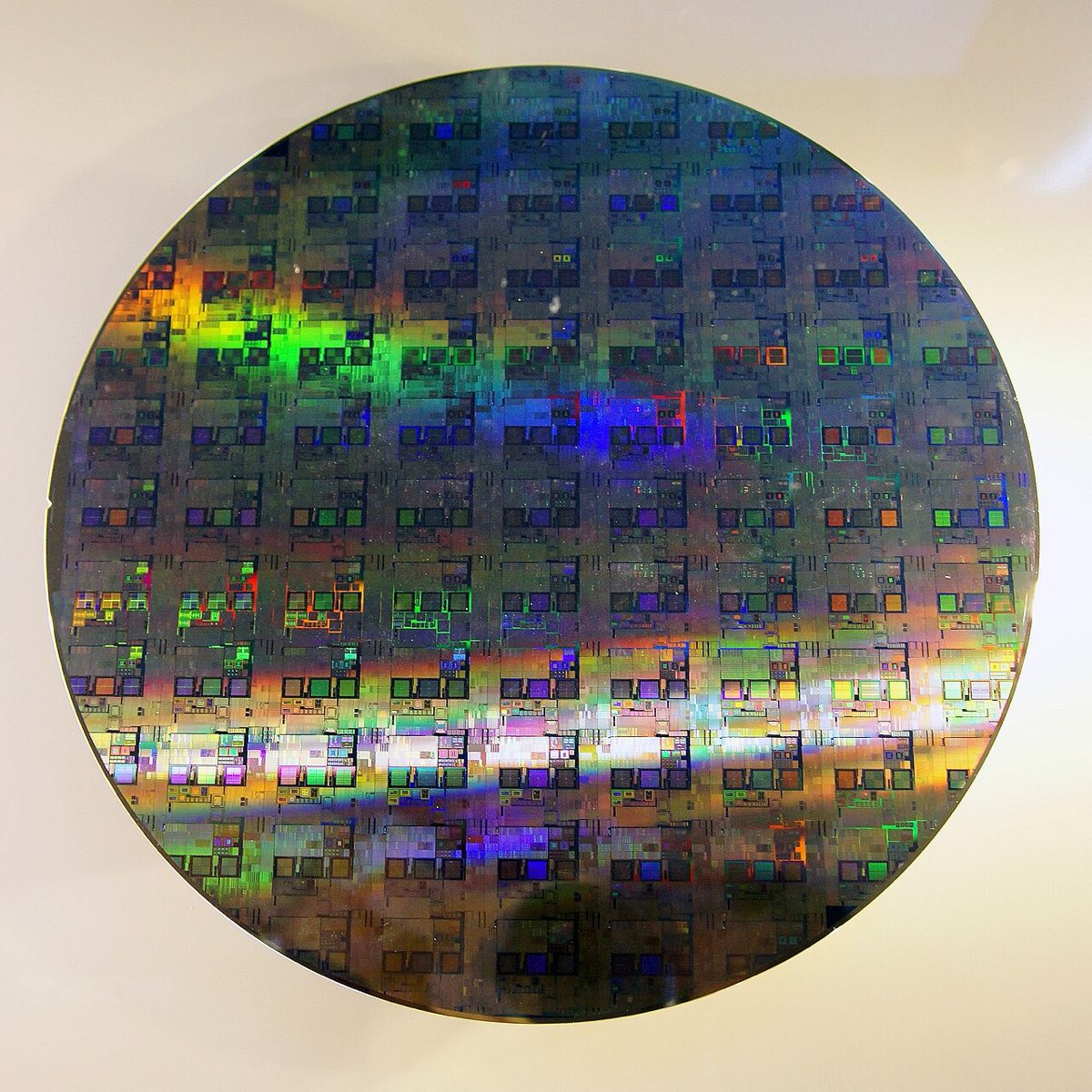
A chip factory prints hundreds of identical chips on a round silicon wafer and then cuts them apart. A GPU is one of those pieces. Running a large AI model means linking many such chips together with memory and networking that sit off the chip.
Cerebras skips the cutting. Its Wafer-Scale Engine keeps one huge square of the wafer as a single processor. The prospectus describes a chip about the size of a dinner plate and lists the hard problems that came with it: yielding it, delivering power to it without damaging the board, packaging it without cracking it, and cooling it.
The yield problem
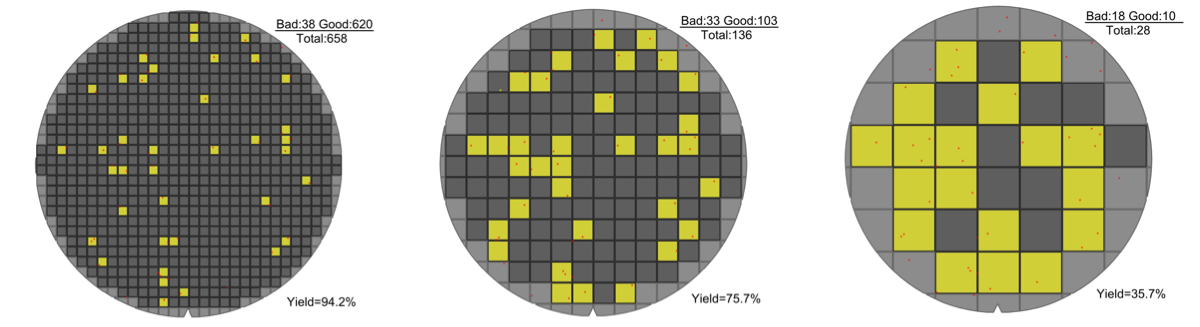
Every wafer has a few random defects. On a wafer of small chips, a defect ruins only the chip it lands on, so most chips survive. On a wafer of large chips, each defect takes out a bigger share of the silicon. A chip the size of a whole wafer would almost always contain a flaw, which is why, according to the prospectus, earlier efforts to commercialize wafer-scale processors failed.
Cerebras's answer is redundancy. The prospectus says the design treats the wafer like a small data center: it includes spare building blocks, detects the flawed ones, switches them off and routes around them, so that the remaining blocks form a working whole. The company notes that memory makers have long used the same trick to reach near-perfect yields.
Three generations
| Chip | Announced | Transistors | Cores |
|---|---|---|---|
| WSE-1 | August 2019 | 1.2 trillion | 400,000 |
| WSE-2 | April 2021 | 2.6 trillion | 850,000 |
| WSE-3 | March 2024 | 4 trillion | 900,000 |
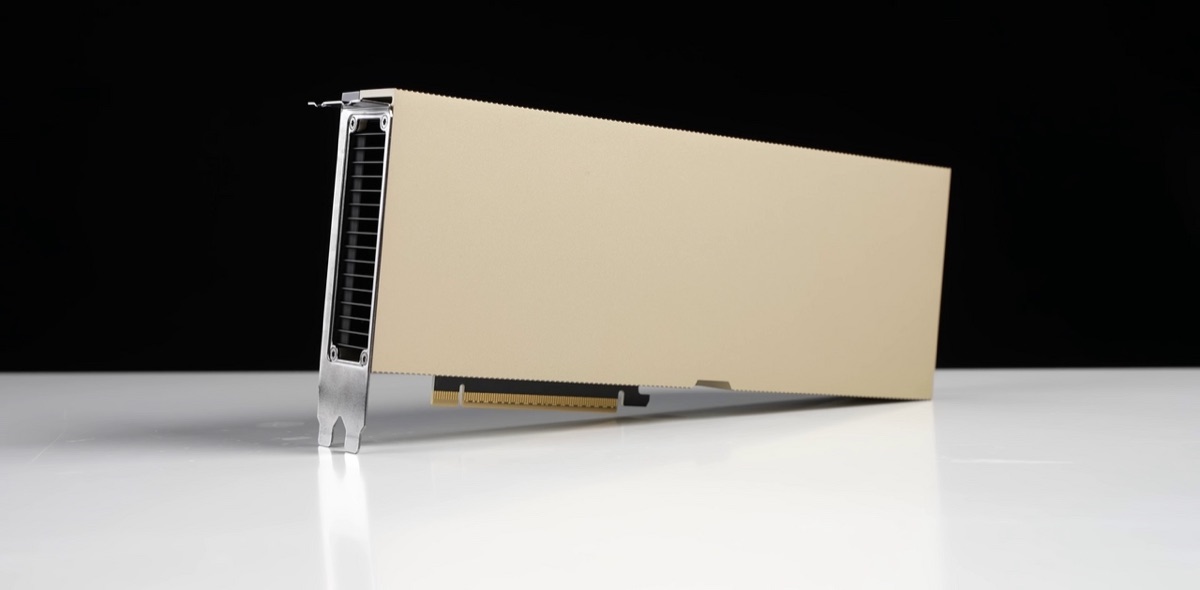
The WSE-3, made on TSMC's 5 nm process, covers 46,225 square millimeters and, according to the prospectus, delivers 21 petabytes per second of memory bandwidth and 214 petabits per second of fabric bandwidth between cores. For comparison, the prospectus puts Nvidia's B200 package, which combines two chips, at 208 billion transistors on about 1,600 square millimeters. Cerebras claims 250 times more on-chip memory and 2,625 times more memory bandwidth than that package. Each WSE-3 sits inside a CS-3 system that supplies power, cooling and networking.
Why it matters for inference
The company's argument is about memory, not raw math. As the prospectus explains it, a language model generates text one token at a time, and producing each token requires moving the model's weights from memory to the compute units. Because each token depends on the previous one, that step cannot be parallelized away, so the speed of answers is limited by memory bandwidth. GPUs keep most of their memory on separate chips connected by a comparatively narrow path. Cerebras keeps 44 GB of fast SRAM on the same silicon as the cores.
Definition: a memory-bound workload is one where the processor spends more time waiting for data than doing arithmetic. Cerebras's pitch is that token-by-token generation is memory-bound, so a chip with enormous on-chip bandwidth answers faster even if its raw compute is not proportionally larger.
The trade-off is capacity. Forty-four gigabytes is small next to the weights of a large model: a 70-billion-parameter model stored at 16 bits per weight needs about 140 GB. Serving models that size means spreading them over more than one wafer. The company says its inference runs up to 15 times faster than leading GPU-based systems on leading open-source models, a benchmark claim that is its own.
Where the money comes from
| Year | Hardware revenue | Cloud and services | Total revenue | Loss from operations | Net income (loss) |
|---|---|---|---|---|---|
| 2024 | $212.0M | $78.3M | $290.3M | $(101.4)M | $(481.6)M |
| 2025 | $358.4M | $151.6M | $510.0M | $(145.9)M | $237.8M |
Revenue grew 76% in 2025, with cloud and services up 94% and hardware up 69%. Over a longer span the growth is steeper: the prospectus lists revenue of $24.6 million in 2022 and $78.7 million in 2023. The operating loss widened, though. The positive net income comes almost entirely from other income: the prospectus attributes $363.3 million of it to a gain on extinguishing a forward contract liability, after a $401.3 million loss on the same item in 2024. That liability was the obligation tied to the preferred stock G42 had agreed to buy, and it was extinguished in 2025 after the purchase lapsed. On the company's own non-GAAP measure, which strips out stock compensation and the swings on that liability, Cerebras lost $75.7 million in 2025, up from $21.8 million in 2024. Not all of the IPO money is growth capital either: the prospectus says about $416 million of the proceeds will cover tax withholding on employee stock units that vest with the listing.
Key caveat: the 2025 profit is an accounting result, not an operating one. Without the one-time gain on the forward contract liability, Cerebras lost money from operations in both years, and the loss grew.
Customers
The prospectus names its biggest customers. In 2025 the Mohamed bin Zayed University of Artificial Intelligence, MBZUAI, supplied 62% of revenue and G42 supplied 24%, down from 85% in 2024. Both are based in Abu Dhabi, so one emirate accounted for 86% of the year's revenue. PitchBook also points out that revenue from US customers fell 34%, from $282.7 million to $187.6 million.

The OpenAI agreement
The future revenue is concentrated in a different way. In December 2025 Cerebras signed a master relationship agreement with OpenAI, under which OpenAI agreed to buy 750 megawatts of inference capacity, deployed in tranches from 2026 through 2028, each with a three- or four-year term that OpenAI can extend to five. OpenAI also holds an option on another 1.25 gigawatts by the end of 2030, for up to 2 gigawatts in total. The prospectus describes the deal as valued at more than $20 billion and says OpenAI's Codex-Spark already runs on Cerebras hardware.
The agreement is a large part of the $24.6 billion of remaining performance obligations Cerebras reported at the end of 2025. The company expects to recognize about 15% of that within 24 months, 43% in the following two years, and the rest after that. The deal comes with strings in both directions:
- A loan. OpenAI provided a $1.0 billion working capital loan that matures no later than 2032.
- A warrant. OpenAI can buy up to 33.4 million non-voting shares at $0.00001 each as milestones are met. About 4.5 million vested in January when the loan arrived, and another 5.6 million are tied to Cerebras's market value passing $40 billion.
- Delivery risk. If Cerebras misses capacity timelines or service levels, OpenAI can terminate part or all of the agreement.
Amazon Web Services is the other new name. The prospectus says AWS signed a binding term sheet to become the first hyperscale cloud to deploy Cerebras systems in its own data centers.
What critics and analysts flagged
Independent readers of the filing focused on concentration and quality of earnings.
PitchBook's breakdown of the April filing highlights the Abu Dhabi share of revenue, the decline in US revenue, and that profitability is driven largely by a paper gain. In an analysis for Investing.com published two days before pricing, Khasay Hashimov argued that the company has swapped one concentration problem for another: the G42 dependence is shrinking, but OpenAI now dominates the backlog, so any change in that relationship would hit Cerebras directly. He also flagged the foundry. The prospectus confirms that TSMC makes all of Cerebras's wafers and that the company has no formal long-term supply or allocation commitment from TSMC, which also builds chips for much larger competitors.
Valuation is the third question. At CNBC's $95 billion figure, the market was paying more than 180 times 2025 revenue for a company that lost money from operations. The first-day price says investors want exposure to fast inference. It does not say whether Cerebras can widen its customer list, which is the risk its own numbers point to.

What developers can use today
Most developers will never buy a CS-3. What you can use is the hosted inference service, which Cerebras launched in August 2024. Its documentation says the API works with OpenAI's client libraries for many common workflows when you point them at https://api.cerebras.ai/v1. Cerebras also publishes its own SDKs, cerebras_cloud_sdk on PyPI and @cerebras/cerebras_cloud_sdk on npm. You create a key in the Cerebras cloud console, and the docs note that free accounts get lower per-minute limits than paid ones.
From an existing OpenAI-style codebase, trying it looks like this:
import os
from openai import OpenAI

client = OpenAI(base_url="https://api.cerebras.ai/v1", api_key=os.environ["CEREBRAS_API_KEY"])
reply = client.chat.completions.create(
    model="<model id from the Cerebras docs>",
    messages=[{"role": "user", "content": "Summarize this stack trace"}],
)
Compatibility is not total. The documentation lists OpenAI parameters that behave differently or are not supported, so read that page before you swap providers in production.
Where speed changes the product is where to test it:
- Agent loops. A coding agent that makes dozens of sequential model calls feels each one. Measure the time for a full task, not a single response.
- Voice. Latency between a user finishing a sentence and hearing a reply is felt directly.
- Live demos. At a hackathon, a judge watching a spinner is a cost. Fast inference shortens the dead time.
Practical tip: benchmark on your own prompts and measure time to first token, tokens per second and total task time separately. Check the current model list before you design around a specific model, because hosted catalogs change often, and handle 429 rate-limit errors from day one if you are on the free tier.
What to watch
As of May 15, the open questions are the ones the prospectus itself raises. The first is delivery: OpenAI's capacity arrives in tranches from 2026 to 2028, and missed timelines give OpenAI the right to walk away from part of the deal. The second is diversification: whether the AWS term sheet turns into a deployment that brings in a broad base of customers. The third is supply, with every wafer coming from one foundry and no long-term allocation. Quarterly reports will now show how fast the backlog turns into revenue, and the lock-up on insider shares runs until the earlier of 180 days or shortly after third-quarter earnings. For developers on the public API, the practical question is capacity, and whether rate limits and model choices for small customers keep pace as large contracts claim new hardware.
Sources
- Cerebras Systems announces closing of initial public offering (Cerebras, May 15, 2026)
- Cerebras Systems final prospectus, Form 424B4 (SEC, May 14, 2026)
- Cerebras pops 68% in Nasdaq debut (CNBC, May 14, 2026)
- Breaking down AI chipmaker Cerebras' S-1 (PitchBook via Yahoo Finance, April 17, 2026)
- Cerebras' $48 billion IPO tests the market's inference bet (Khasay Hashimov, Investing.com, May 11, 2026)
- Cerebras Systems pulls plug on its IPO days after big fundraise (Crunchbase News, October 2025)
- Cerebras (Wikipedia)
- OpenAI compatibility (Cerebras inference documentation)
More from the blog
Hardware ·
OpenAI and Broadcom unveil Jalapeño, OpenAI's first custom inference chip
OpenAI designed it, Broadcom built it, and the companies say it went from design to tape-out in nine months. No specs or benchmarks yet; deployment starts late 2026.
11 min read
Policy ·
Third Circuit upholds ruling that ROSS's AI training on Westlaw headnotes was not fair use
A federal appeals court affirmed that ROSS Intelligence infringed Thomson Reuters' copyrights by training a legal search tool on Westlaw headnotes. The opinion itself is still sealed.
10 min read

Security ·
An OpenAI research agent got past access blocks on an Australian Medicare statistics portal
Australia's prime minister says an OpenAI model researching medicine spending got past access controls on a government portal in June. OpenAI told the government in September.
10 min read