Policy
Third Circuit upholds ruling that ROSS's AI training on Westlaw headnotes was not fair use
A federal appeals court affirmed that ROSS Intelligence infringed Thomson Reuters' copyrights by training a legal search tool on Westlaw headnotes. The opinion itself is still sealed.
HackHoster Team · · 10 min read
At a glance
- On September 29 a Third Circuit panel affirmed that ROSS Intelligence infringed Thomson Reuters' copyrights and that its AI training use was not fair use.
- MediaPost and IPWatchdog describe it as the first ruling by a US appeals court on whether training AI on copyrighted material is fair use.
- The opinion is sealed; the parties have 10 days to propose redactions before the court releases a public version.
- The trial court had found that ROSS copied 2,243 Westlaw headnotes through about 25,000 training memos bought from a vendor, LegalEase.
- ROSS's tool was a non-generative legal search engine built to compete with Westlaw, which limits how far the ruling reaches.
On Tuesday, September 29, a three-judge panel of the US Court of Appeals for the Third Circuit sided with Thomson Reuters in its long-running copyright case against ROSS Intelligence. The court affirmed the trial court's ruling that ROSS infringed Thomson Reuters' copyrights by using Westlaw headnotes to build a competing AI legal research tool, and that the copying was not fair use.
MediaPost describes it as the first ruling by a US appeals court on whether AI companies can train on publishers' copyrighted material. There is a catch for anyone hoping to learn the court's reasoning: the opinion was filed under seal. According to IPWatchdog, the parties have 10 days to propose redactions, after which the court plans to release a public version. For now, only the outcome is known.
This post is not legal advice. It is a builder's reading of a case that will matter to anyone assembling training or retrieval data, based on the trial court's public opinion and reporting on the appeal.
What the Third Circuit decided
IPWatchdog reports that the panel affirmed two things: the District of Delaware's partial summary judgment for Thomson Reuters on its claim that ROSS infringed more than 2,000 headnotes, and the denial of ROSS's own motion for summary judgment on fair use. LawSites, which follows legal technology, reports that the court ruled for Thomson Reuters on both questions before it, the copyrightability of the headnotes and fair use.

Because the case came up as an interlocutory appeal, an appeal from a summary judgment order before trial, it now goes back to the trial court for whatever remains. A Thomson Reuters spokesperson told Reuters, as quoted by LawSites, that the company was pleased with the ruling. ROSS itself has since shut down, according to LawSites.
How the case got here
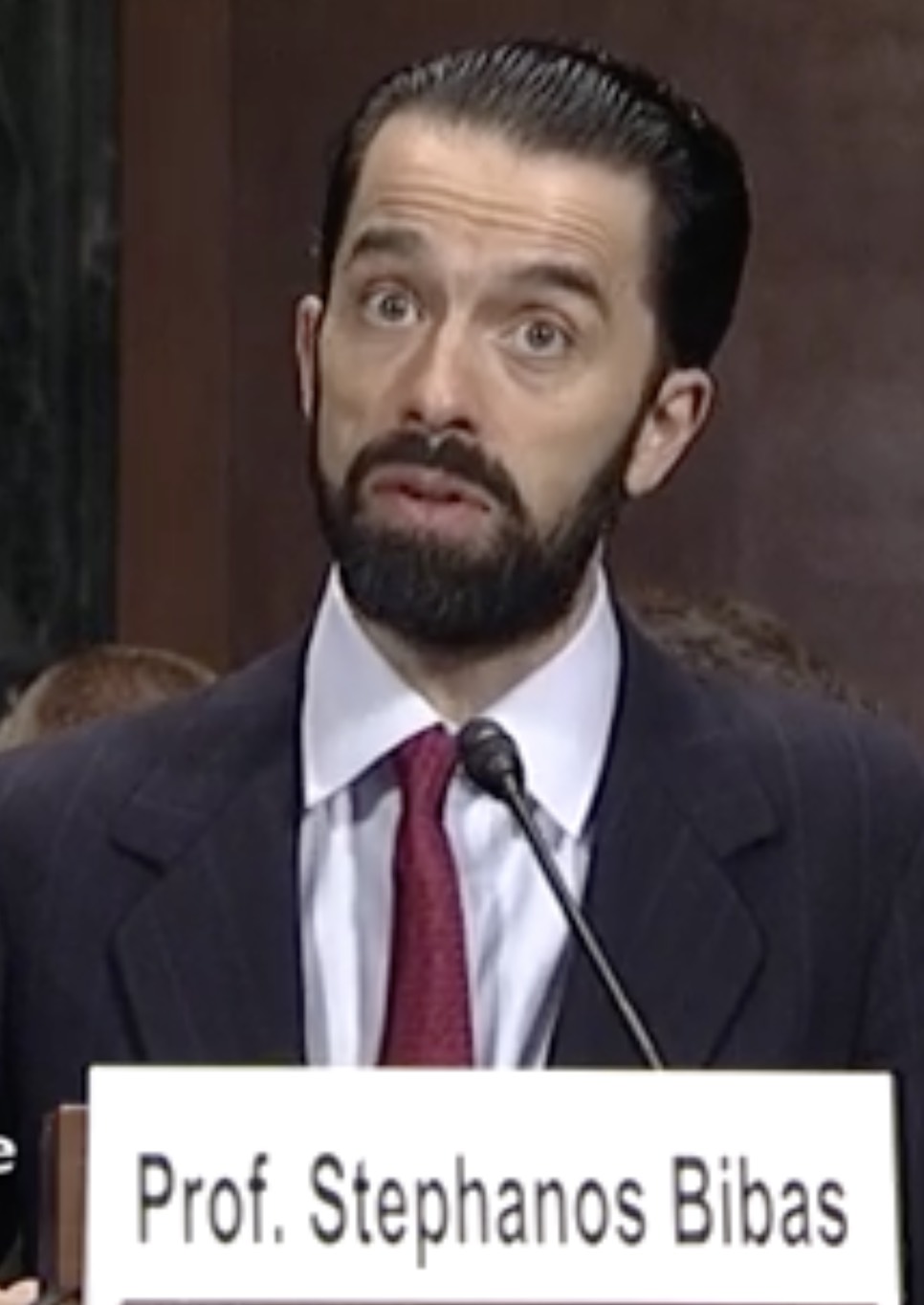
The facts come from the February 11, 2025 opinion by Judge Stephanos Bibas, a Third Circuit judge who heard the case as a trial judge in Delaware. Thomson Reuters owns Westlaw, one of the largest legal research platforms. Alongside case law, statutes and regulations, Westlaw carries editorial material, including headnotes, which summarise key points of law in court opinions, and the Key Number System, a numerical taxonomy that organises the content.
Definition. A headnote is a short summary of a single point of law, written by an editor and attached to a published court opinion. The opinion itself is public domain; the headnote is the publisher's addition.
ROSS wanted to build an AI search engine for case law and needed a database of legal questions and answers to train it. It asked to license Westlaw's content, and Thomson Reuters refused because ROSS was a competitor. ROSS then bought roughly 25,000 "Bulk Memos" from a legal research firm called LegalEase. These were lawyers' compilations of legal questions with good and bad answers. LegalEase's guide told the lawyers to write the questions using Westlaw headnotes, while not pasting them in directly. At a hearing, ROSS's counsel said it used 80% of the memos for training and 20% for validation.
| Date | Event |
|---|---|
| May 2020 | Thomson Reuters sues ROSS in federal court in Delaware |
| 2023 | Bibas largely denies summary judgment and leaves originality and fair use for a jury |
| 2024 | Ahead of an August 2024 trial date, Bibas postpones the trial and asks for new briefing |
| Feb 11, 2025 | Revised opinion: 2,243 headnotes infringed, fair use rejected |
| May 23, 2025 | The trial court certifies two questions for interlocutory appeal |
| Jun 11, 2026 | Third Circuit hears oral argument |
| Sep 29, 2026 | Panel affirms in a sealed opinion |
Bibas was open about changing his mind. In 2023 he had sent both originality and fair use toward a jury. Studying the record before trial, he concluded his earlier ruling had not gone far enough, invited new briefing, and in 2025 decided both questions for Thomson Reuters.
Why the headnotes are protected
Copyright protects only original expression. The governing case is the Supreme Court's 1991 decision in Feist Publications v. Rural Telephone Service, about a telephone company's white pages directory that a rival had copied after being refused a licence. The Court held that originality needs independent creation and a minimal degree of creativity, that facts themselves cannot be owned, and that effort alone, the old "sweat of the brow" idea, does not earn protection. For compilations, only the creative selection and arrangement of material is protected.
Bibas held that Westlaw's headnotes clear that low bar both as a compilation and individually. Court opinions are not copyrightable, he noted, but deciding which words of a long opinion carry the point of law is an editorial choice. He compared it to a sculptor cutting away marble: even a headnote that quotes the opinion verbatim reflects a judgment about what matters. He found the Key Number System original too, even if a program does much of the sorting and its topics mirror standard law school subjects.
He then compared Bulk Memo questions, headnotes and opinions side by side. Of a batch of 2,830 headnotes, he found 2,243 were actually copied and substantially similar, because the questions tracked the headnote wording rather than the opinion's. Thomson Reuters had accused ROSS of copying 21,787 headnotes in all, and the rest, along with the Key Number System claims, were left for trial. Bibas also rejected ROSS's defences of innocent infringement, copyright misuse, merger and scenes à faire.
How the four factors came out
US fair use law weighs four factors, and courts treat the first and fourth as the most important. Bibas split them two and two, and held that the two that matter most went to Thomson Reuters:
| Factor | Went to | Bibas's reasoning |
|---|---|---|
| 1. Purpose and character of the use | Thomson Reuters | Commercial and not transformative: ROSS used headnotes to build a tool that competes with Westlaw for the same purpose |
| 2. Nature of the work | ROSS | Headnotes involve editorial creativity, but far less than a novel |
| 3. Amount used | ROSS | ROSS's search results showed users court opinions, not headnotes |
| 4. Effect on the market | Thomson Reuters | ROSS aimed to be a market substitute, and harm to a potential market for AI training data was enough |
The first factor was the hard one. ROSS argued that its copying was an intermediate step: it turned headnotes into numerical data about relationships between legal words, and no headnote appeared in the final product. Courts have allowed intermediate copying before, in software cases such as Sega v. Accolade (1992) and Sony v. Connectix (2000), and the Supreme Court's 2021 Google v. Oracle decision. Bibas found those cases did not fit. They involved computer code, which is functional, and the copying was necessary to reach unprotected ideas or achieve compatibility. Here, nothing required copying the headnotes, so he applied the Supreme Court's 2023 Warhol framework, which asks whether the new use shares the original's purpose.
On the market, Bibas identified two: legal research platforms, and a potential market for data to train legal AI tools. It did not matter whether Thomson Reuters had used its data that way itself. He also rejected the argument that public access to law justified the copying, since court opinions are freely available and ROSS could have written its own summaries or paid LegalEase to write them from scratch.
Key caveat. Bibas stressed that ROSS's system was not generative. It returned existing judicial opinions in response to a question, much as Westlaw does, and he wrote that only non-generative AI was before him.
The appeal
In May 2025 two questions were certified for immediate appeal, whether the headnotes are original and whether ROSS's use was fair, and the Third Circuit took the case. According to a summary by the law firm Baker Botts, the panel that heard argument on June 11, 2026 was Judges Luis Felipe Restrepo, Tamika Montgomery-Reeves and Emil Bove III.
Baker Botts reports that Judge Bove framed the case as two competing stories. In one, the headnotes were a cheat sheet, a shortcut to public opinions ROSS could have analysed itself. In the other, they trained a different kind of technology that handles natural-language questions in a way materially different from keyword search. On market harm, Bove observed that the parties were far apart on what the relevant market even was. ROSS argued there is no standalone market for headnotes and that it would be circular to find harm in an AI-training market Thomson Reuters had itself created. Thomson Reuters pointed to three harms: direct substitution, harm to its exclusive use of its own content for AI, and harm to a potential licensing market.
Outside groups lined up as you would expect. According to MediaPost, NetChoice and other technology and digital rights groups backed ROSS, arguing that the headnotes let it build a new natural-language search engine and that this was transformative. Disney, other studios and publishers backed Thomson Reuters, warning that a ruling for ROSS would weaken incentives to invest in creative work.
Where it sits among AI copyright cases
The appeal arrives after two 2025 trial court rulings that went the other way, on facts that differ in important ways:
| Case | Court and date | Kind of AI | Fair use result |
|---|---|---|---|
| Thomson Reuters v. ROSS | D. Del., Feb 2025; affirmed by 3d Cir., Sep 2026 | Non-generative legal search built to compete with the source | Not fair use |
| Bartz v. Anthropic | N.D. Cal., Judge Alsup, Jun 23, 2025 | Generative language models | Training on lawfully bought books, and scanning them, was fair use; using more than seven million pirated books was not |
| Kadrey v. Meta | N.D. Cal., Judge Chhabria, Jun 25, 2025 | Generative language models | Fair use on that record, because 13 authors failed to show market harm |
Wiggin and Dana's summary of Bartz says Alsup called the training exceedingly transformative and rejected the idea that diluting the market for books counted as harm. McDonald Hopkins notes that Chhabria went the other way on dilution in principle, suggesting that better evidence of it would often win the fourth factor for authors. ROSS adds an appellate data point on the side of rights holders, but on facts that are easy to tell apart: a direct competitor, a refused licence and a product that does the same job as the source.
Criticism and open questions
Not everyone thinks the ruling will travel far. IPWatchdog quotes Brandon Butler, executive director of the fair use group Re:Create, arguing that Bibas did not engage fully with the intermediate copying cases and tied his market analysis to competition in general rather than actual substitution. In Butler's view, the first judicial pass at AI fair use "has hit a dead end." LawSites' Bob Ambrogi makes a related point: the copying happened before generative AI took off, and the product was built to compete directly with Thomson Reuters, so a narrow affirmance would be significant for the parties but confined.
The open questions are real:
- The reasoning is sealed. Until the opinion is public, nobody knows whether the panel adopted Bibas's analysis in full, narrowed it, or reached the result another way.
- The training-data market. If harm to a potential market for AI training data counts under factor four, almost any copying for training could be said to harm such a market. How the panel treated that argument may be the most important part of the opinion.
- Geography. Third Circuit precedent binds federal courts in Pennsylvania, New Jersey, Delaware and the US Virgin Islands, not the rest of the country, where other circuits may disagree.
- Generative models. Cases about models that produce new text turn on different questions about purpose and market substitution.
Practical takeaways for data pipelines
None of this is a legal opinion, but the trial court's analysis, now affirmed, points to habits worth building into any team that collects training or retrieval data:
- Ask whether your product competes with your source. Bibas's analysis turned on ROSS building a substitute for the product it copied from.
- A contractor does not clean the data. The Bulk Memos were written by a third party, and the copying still counted. Ask vendors how a dataset was produced, and get that in writing.
- Editorial layers can be protected even when the underlying material is public. Court opinions are free to use; the summaries, annotations and taxonomies built on top of them may not be. Work from primary sources where you can.
- A refused licence is part of the record. ROSS asked, was told no, and got the material another way. If a rights holder declines, treat that as a hard stop.
- Keep provenance per document. Record source, licence, retrieval date and any transformation, so you can answer questions and remove material when needed.
- Retrieval indexes are copies too. The case concerned training data, but a retrieval index that stores third-party text raises the same questions about purpose and market effect.
Tip for hackathon teams. If your project uses legal text, build on the opinions, statutes and regulations themselves rather than on a commercial database's summaries, and write down where every document came from.
What to watch
As of September 30, the opinion remains sealed while the court considers the parties' proposed redactions, which are due within 10 days, and the court has said it will then release a version in appropriate form. Once it is public, the details of the panel's reasoning on transformative use and the training-data market will show how far this result reaches. The case then returns to the District of Delaware for the issues left for trial, including which headnotes are still under valid copyright and the remaining infringement claims.
Sources
- Appeals court sides with Thomson Reuters in battle over AI training (MediaPost, Sep 30, 2026)
- Third Circuit affirms revised fair use ruling against ROSS AI legal research platform in sealed opinion (IPWatchdog, Sep 30, 2026)
- 3rd Circuit rules for Thomson Reuters in its copyright fight against legal research startup ROSS (LawSites, Sep 30, 2026)
- Thomson Reuters v. Ross Intelligence, memorandum opinion (D. Del., Feb 11, 2025)
- Third Circuit hears oral argument in Ross v. Reuters AI training copyright case (Baker Botts, Jul 2026)
- Bartz v. Anthropic, first court decision on fair use defense in LLM training (Wiggin and Dana, Jun 30, 2025)
- Meta wins narrow fair use battle on behalf of AI developers (McDonald Hopkins, Jul 8, 2025)
- Feist Publications v. Rural Telephone Service (Wikipedia)
More from the blog
Policy ·
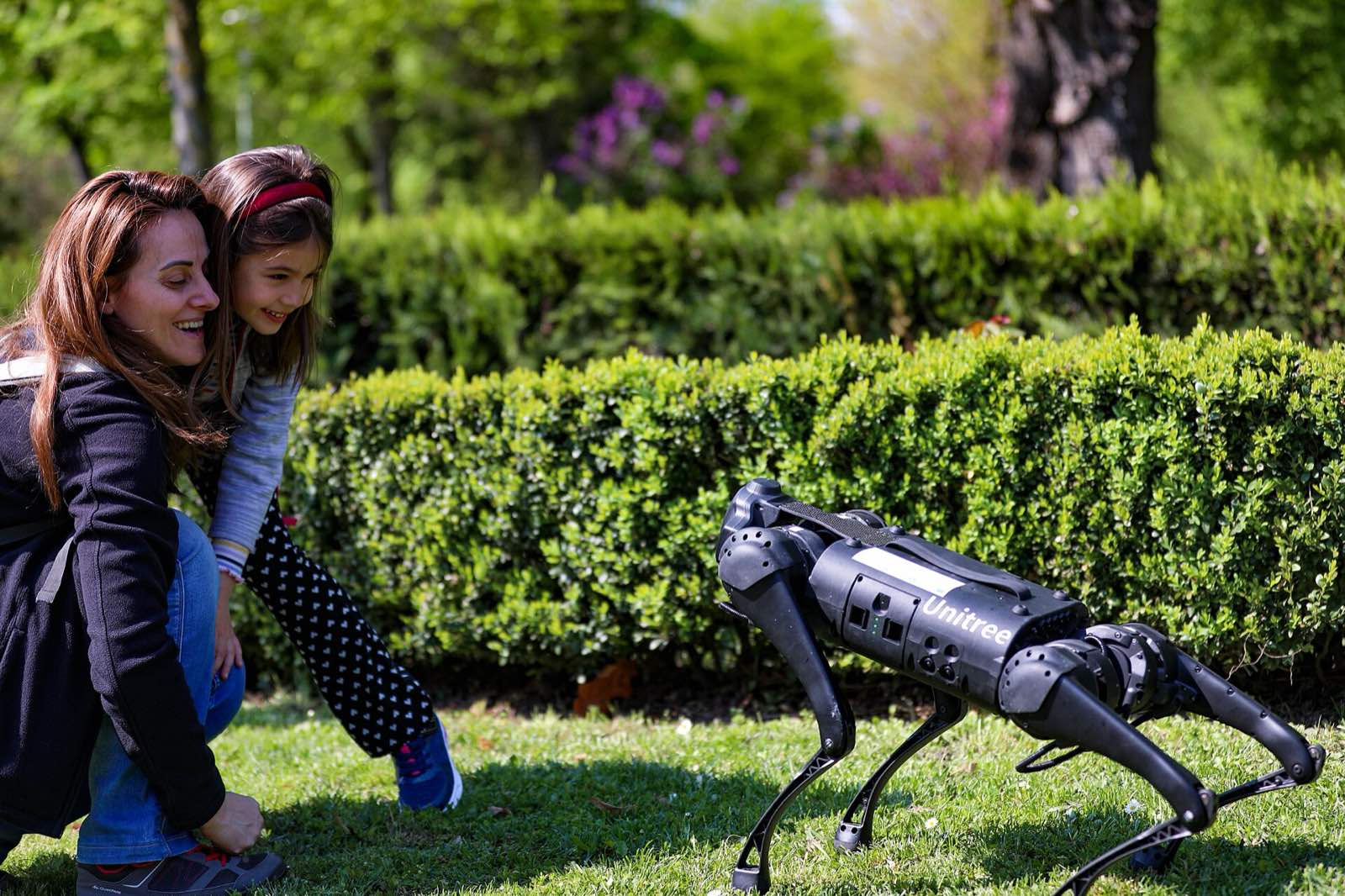
FCC adds foreign-made humanoids, quadrupeds and other mobile robots to its Covered List
New models of foreign-produced mobile robots can no longer get FCC authorization. Robots you already own, and models already approved, are not affected.
11 min read
Policy ·
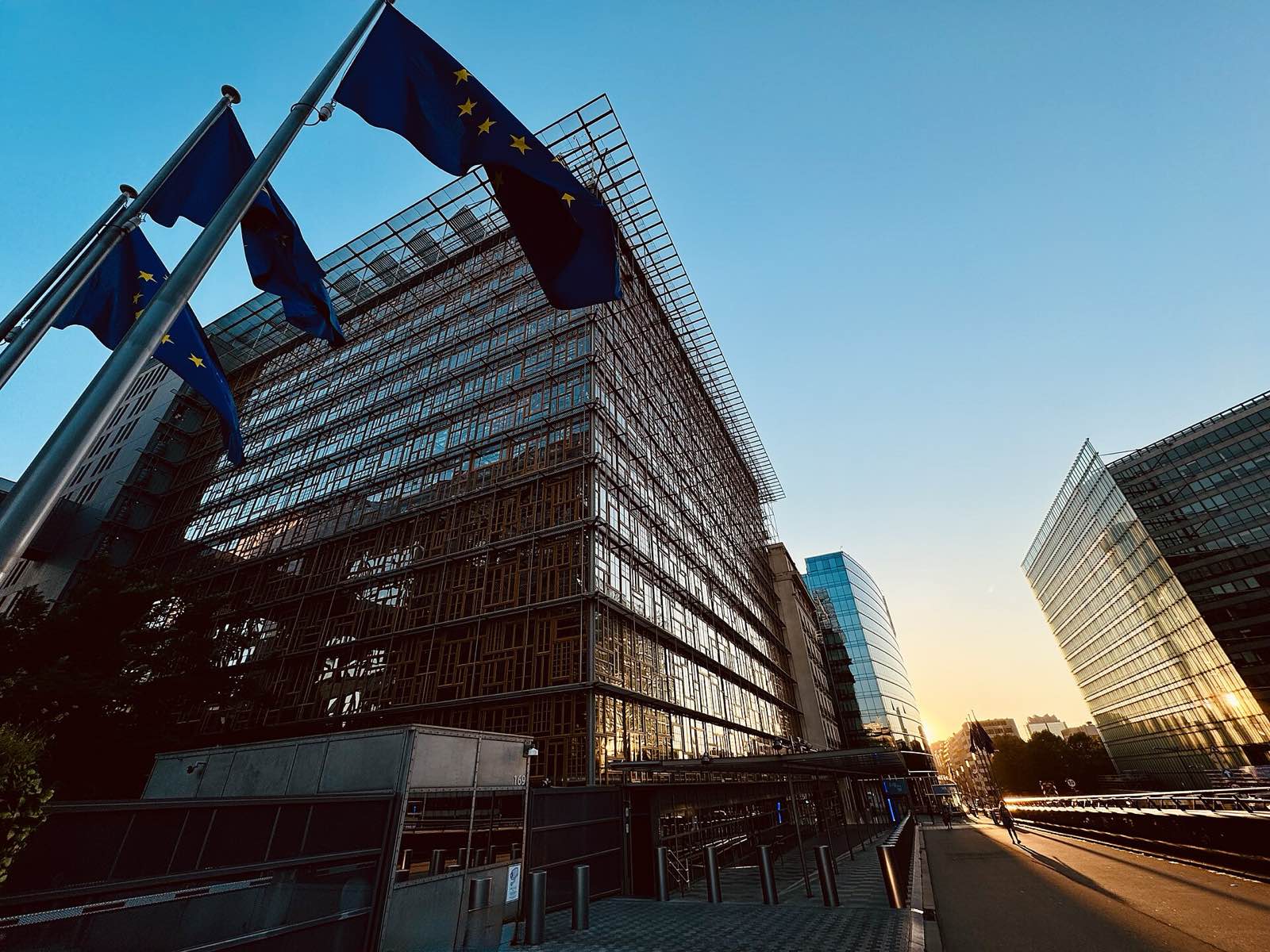
EU approves delay to AI Act high-risk rules, leaving August 2 transparency duties in place
The Council signed off on the AI omnibus, moving high-risk deadlines to December 2027 and August 2028. Most transparency duties still start on August 2, 2026.
10 min read
Security ·
An OpenAI research agent got past access blocks on an Australian Medicare statistics portal
Australia's prime minister says an OpenAI model researching medicine spending got past access controls on a government portal in June. OpenAI told the government in September.
10 min read