Policy
FCC adds foreign-made humanoids, quadrupeds and other mobile robots to its Covered List
New models of foreign-produced mobile robots can no longer get FCC authorization. Robots you already own, and models already approved, are not affected.
HackHoster Team · · 11 min read
At a glance
- On July 28, 2026, the FCC added foreign-produced advanced robotic devices and foreign-produced power inverters to its Covered List.
- Covered equipment cannot get new FCC equipment authorizations, which most electronics need before they can be imported, marketed or sold in the US.
- The definition covers ground robots over 4.4 pounds with an environmental sensor, a network link of at least 200 kbps, and navigation or control software.
- A robot counts as foreign-produced unless it is a domestic end product under federal Buy American rules, whatever the maker's nationality.
- Robots already owned, models authorized before July 28, and federal government purchases are unaffected; the Department of War can grant Conditional Approvals.
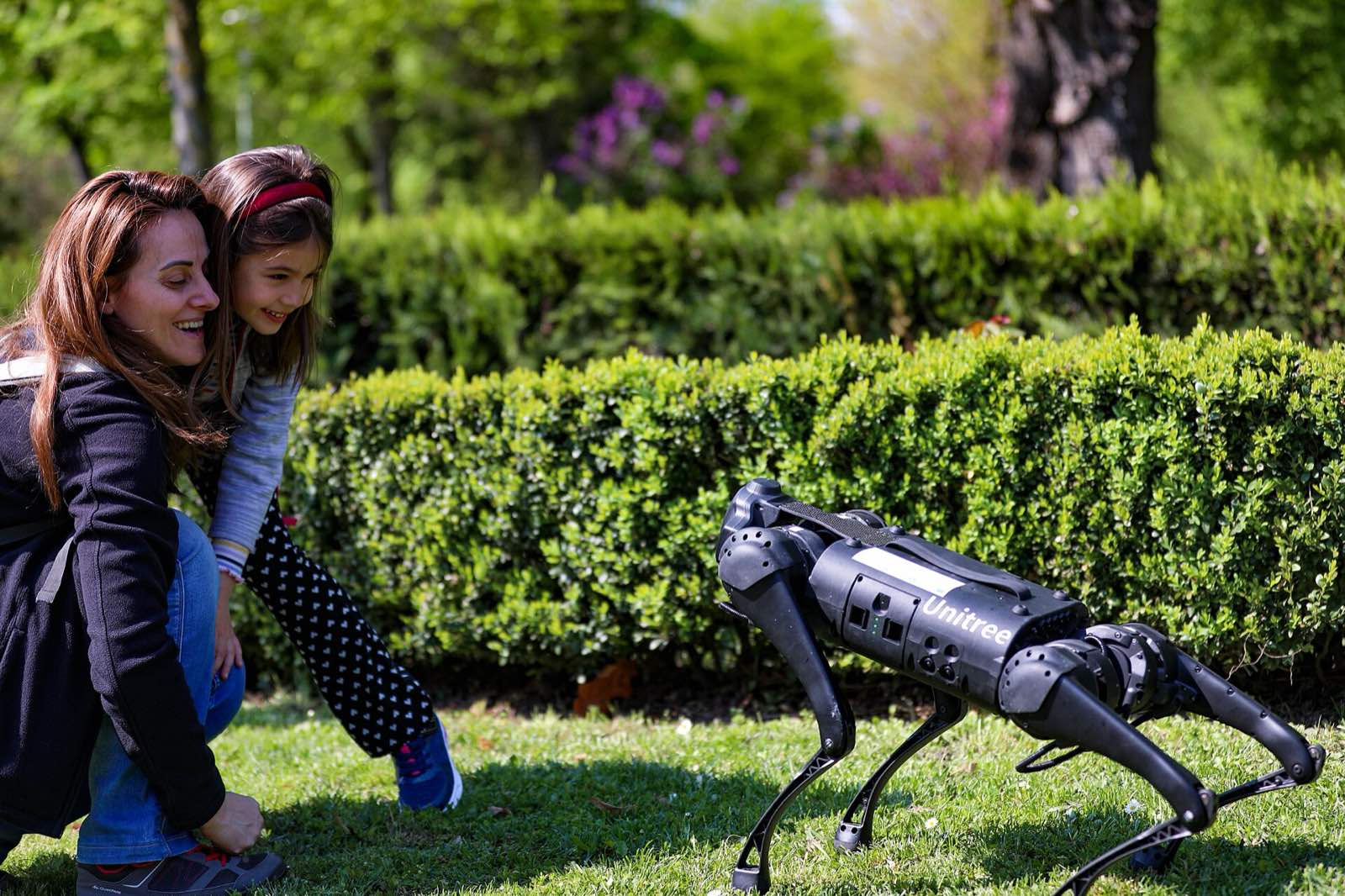
On July 28, the Federal Communications Commission added two new categories to its Covered List: foreign-produced "advanced robotic devices", meaning mobile robots such as humanoids and quadrupeds, and foreign-produced power inverters. Equipment on the list cannot receive new FCC equipment authorizations, and the FCC's fact sheet notes that most electronic devices need one before they can be imported, marketed or sold in the US. In practice, new foreign-made robot models are shut out of the US market unless the maker wins an exemption.
The FCC did not make the call itself. Under the Secure and Trusted Communications Networks Act of 2019, it can only update the list at the direction of national security agencies. On July 27, a White House-convened interagency body sent the FCC two National Security Determinations, one for robots and one for inverters. The FCC's Public Safety and Homeland Security Bureau put both on the list the next day, in Public Notice DA 26-786.
For startups, university labs and student teams that build on low-cost imported quadrupeds and humanoids, the details matter more than the headline. This article covers how the Covered List works, what exactly the robot definition includes, why the government says robots are a security risk, what is not affected, and what builders should check before buying hardware.
How the Covered List became an import ban
The Covered List started as a narrow tool. The 2019 Secure Networks Act told the FCC to publish a list of communications equipment and services that national security agencies had found to pose an unacceptable risk, and the FCC used it to bar public funds from paying for such gear. The first entries, dated March 12, 2021, named five Chinese companies: Huawei, ZTE, Hytera, Hikvision and Dahua.
The list gained teeth in 2022. On November 25, 2022, implementing the Secure Equipment Act of 2021, the FCC adopted rules that bar covered equipment from getting equipment authorization at all. The rules close the FCC's Certification route and make clear that covered equipment cannot use the Supplier's Declaration of Conformity route or the exemptions that let some devices be imported or marketed without authorization. Since most electronic devices need one of those paths before they can be sold, a Covered List entry works as a ban on new models.

What has changed recently is the shape of the entries. The early ones named companies. The newer ones name categories of products by where they are made. The bureau's notice says this explicitly: the new robot and inverter entries identify equipment by place of production, not by entity, so the rules that apply to named companies and their affiliates do not kick in.
| Date added | Entry (abridged) | Type |
|---|---|---|
| March 12, 2021 | Huawei, ZTE, Hytera, Hikvision and Dahua equipment | Named companies |
| March 25, 2022 | Kaspersky security products; China Mobile and China Telecom services | Named companies |
| September 20, 2022 | Pacific Networks/ComNet and China Unicom services | Named companies |
| July 23, 2024 | Kaspersky Lab, Inc. software | Named company |
| December 22, 2025 | Foreign-produced drones and their critical components | Category by origin |
| March 23, 2026 | Foreign-produced routers | Category by origin |
| July 28, 2026 | Foreign-produced power inverters and advanced robotic devices | Category by origin |
Source: Appendix A of FCC Public Notice DA 26-786 (Covered List as updated July 28, 2026).
What counts as an advanced robotic device
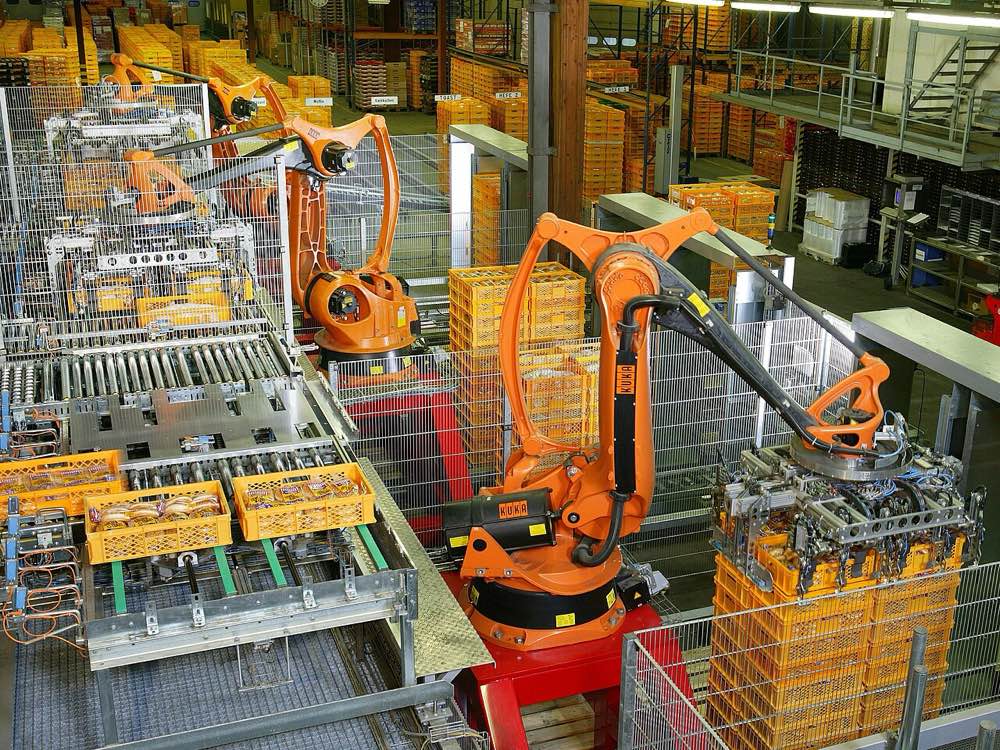
The robot determination, published as Appendix C of the FCC notice, defines the category in some detail. A covered device is a mechanical mobile device, including autonomous mobile robots, humanoid robots and quadrupeds, that meets all four of these conditions:
| Condition | What the determination requires |
|---|---|
| Mobility | Capable of locomotion, obstacle avoidance, navigation or movement on the ground |
| Remote operation | Operates at a distance from a human operator or supervisor, on commands, sensor data or both |
| Weight | Device plus any ground or docking station weighs more than 4.4 pounds |
| Components | Has a sensor that perceives its environment, a wired or wireless link (Bluetooth, Wi-Fi, cellular or satellite) of at least 200 kbps in either direction, and software that controls autonomous navigation, perception, data collection or remote command and control |
The software clause is broad. It covers code running locally or remotely, and it names firmware and AI or machine-learning model weights explicitly. A robot whose navigation runs on a cloud service still qualifies.
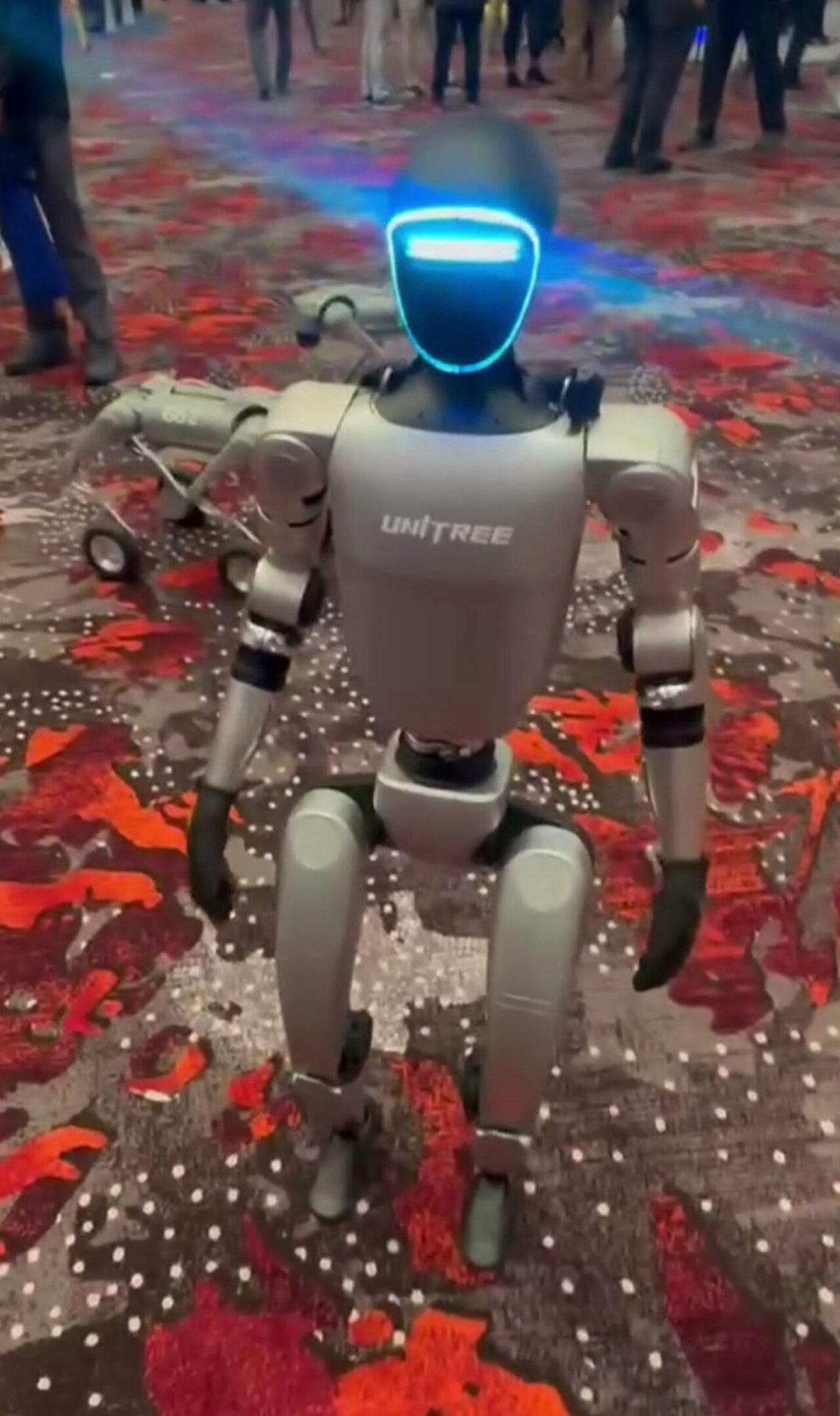
The determination also lists what is not included: connected vehicles of any weight, vehicles that run only on rails, drones (which have their own entry), unmanned underwater vehicles, medical devices regulated by the FDA, including surgical robots, prostheses and powered wheelchairs, and fixed, non-mobile robots. The last exclusion covers the articulated, delta, gantry and SCARA arms used in industry and medicine.
Foreign-produced is broader than Chinese
The determination does not mention any country by name in its definition. It borrows the federal procurement test instead: a product is foreign-produced unless it would qualify as a "domestic end product" under 48 CFR 25.101(a), the Buy American rule. Under that rule, an item must be manufactured in the US, and the cost of its domestic components must exceed a threshold share of the cost of all its components. For most products, the threshold is 65 percent for items delivered from 2024 through 2028 and 75 percent from 2029.
What "foreign-produced" means here: any robot that would not count as a domestic end product under Buy American rules. A robot designed in California but assembled in Shenzhen is covered. So is one assembled in Texas if too much of its component cost is imported. The maker's nationality does not matter.
That reaches well beyond China. Robots built in Europe, Canada, Japan or Korea are covered, and so are robots from US startups that manufacture abroad. UC San Diego roboticist Henrik Christensen told The Robot Report the ban is "potentially much wider than China," and said Canadian and European robots could be affected.
There is one notable gap compared with the drone entry. The drone listing covers foreign-produced drones and their critical components. The robot listing names only finished devices, so actuators, sensors and boards are not themselves on the list.
Why the government says robots are a risk
The determination makes two arguments, one about supply chains and one about cybersecurity.
On supply chains, it says the components that matter, such as actuators, end effectors, batteries and sensors, are concentrated in a handful of countries, some of which have disrupted US supply chains during geopolitical disputes. It ties this to the administration's AI Action Plan and the 2025 National Security Strategy, and to military uses: the determination says ground robots and quadrupeds will be essential on the battlefield, and that the US military is already pursuing robots for autonomous breaching, resupply, force protection and offensive strike.
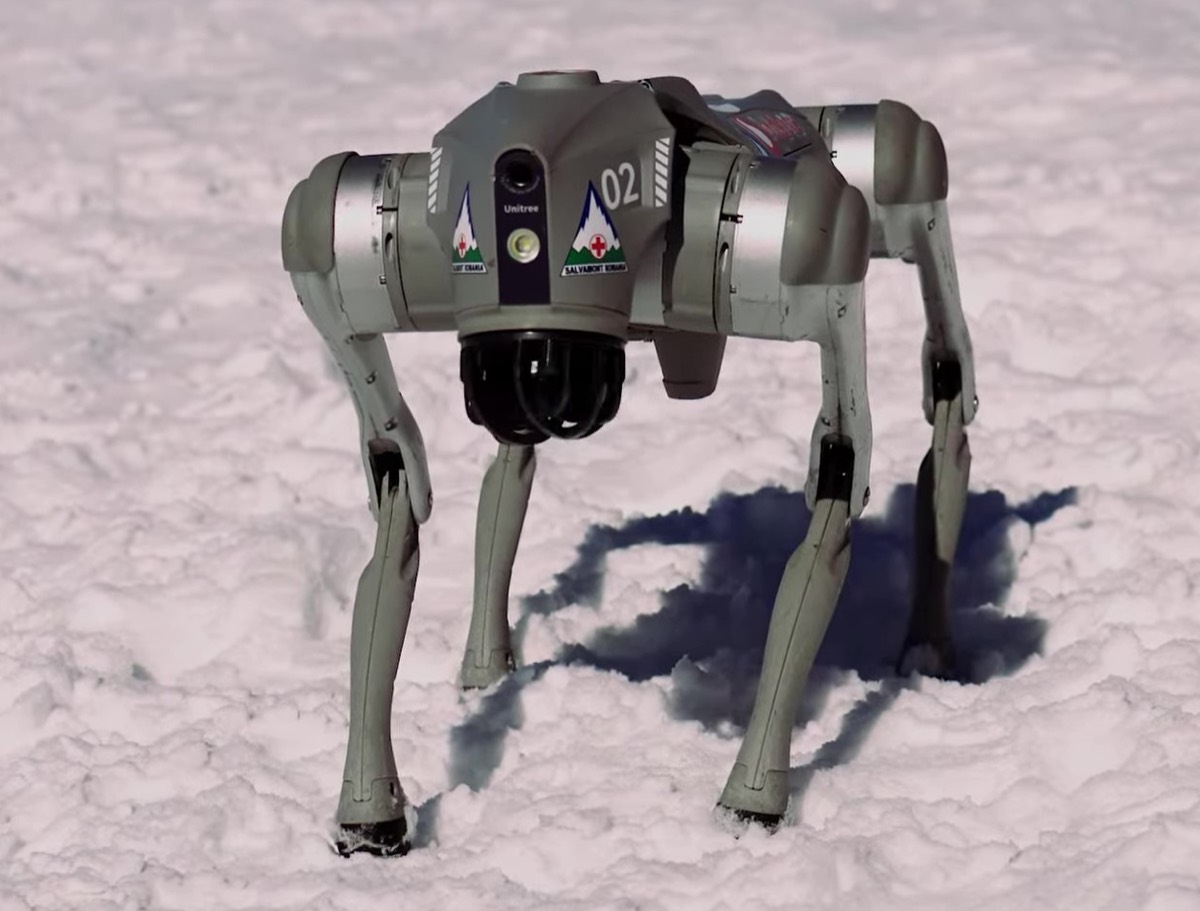
On cybersecurity, it argues that robots are networked sensor platforms. Many carry LiDAR, electro-optical, infrared, acoustic and thermal sensors, and they can build detailed maps of the places they work. The determination says buyers have little visibility into the software provenance of foreign robots, and that some countries' laws restrict how vendors disclose vulnerabilities. It cites three incidents:
- Early 2026: a flaw in one category of foreign-made robots exposed thousands of robots in homes worldwide, including live camera feeds, microphone audio and detailed maps of homes. The determination cites a February 2026 Guardian story about one man who gained control of 7,000 robots.
- A humanoid botnet risk: a vulnerability in certain foreign-made humanoids let a remote attacker take over a robot and scan for others nearby, so an attack could spread on its own.
- April 2025: researchers identified a potentially pre-installed backdoor in foreign-made quadrupeds that gave access to the camera feed and full control of the robot.
For the second incident, the determination cites an IEEE Spectrum report from September 2025. Researchers Andreas Makris and Kevin Finisterre disclosed an exploit they called UniPwn that affected Unitree's Go2 and B2 quadrupeds and G1 and H1 humanoids. It abused the Bluetooth Low Energy channel used to set up Wi-Fi. The encryption keys were hard-coded and had already been published, so an attacker could authenticate and then inject commands, disguised as Wi-Fi settings, that ran with root privileges. An infected robot could scan for other Unitree robots in Bluetooth range and compromise them in turn. Unitree said at the end of September that it had completed most of the fixes. Spectrum also noted an earlier backdoor found in the Unitree Go1.
What is not affected
According to the FCC fact sheet, the restrictions apply only to new device models. The bureau's notice says FCC staff will give guidance to certification bodies, test labs and applicants on how the change applies.
| Situation | Affected by the July 28 action? |
|---|---|
| A robot you already own | No. Keep using it. |
| A model the FCC authorized before July 28 | No. Retailers may keep importing, marketing and selling it. |
| Purchase or use by the federal government | No, per the fact sheet. |
| A new foreign-produced model without a grant | Yes. It cannot get FCC authorization without a Conditional Approval. |
| A model with a Department of War Conditional Approval | No. It can continue to receive FCC authorizations. |
| A small robot of 4.4 pounds or less | Outside the definition, by its own terms. |
The federal carve-out names federal agencies only, so university and startup labs should not assume it covers them.
There is also a way back in. The Department of War can grant a Conditional Approval for a specific robot or a class of robots after finding it does not pose the identified risks; for inverters, the Department of Homeland Security can too. Applications go to conditional-approvals@fcc.gov with the information requested in a guidance document attached to the determination. The determination describes these approvals as a transition measure that lets foreign producers keep getting FCC authorizations while they move manufacturing to the US and address the government's concerns.
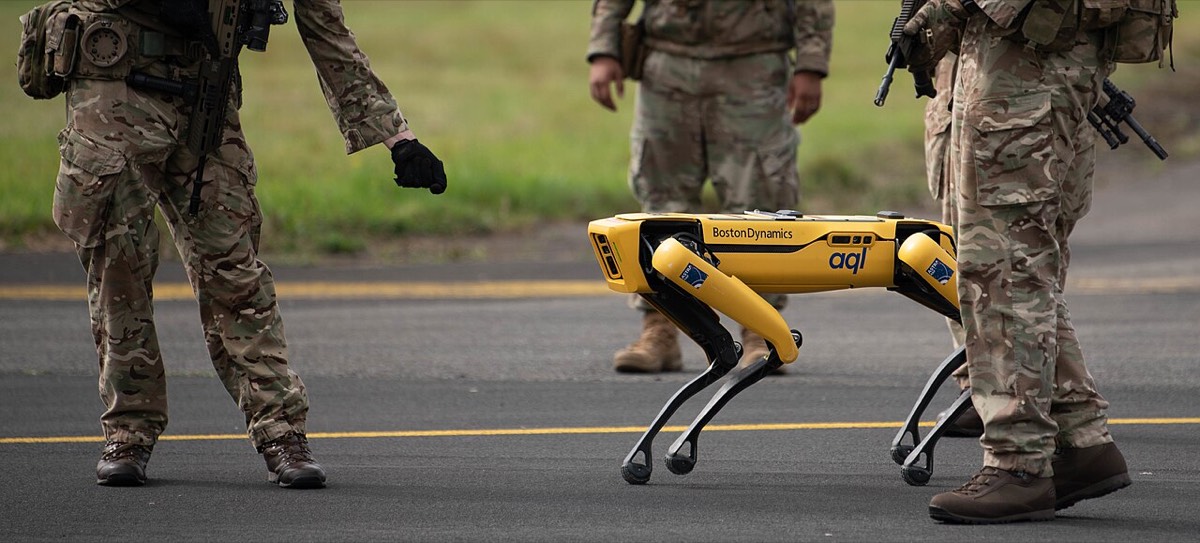
The same action added foreign-produced power inverters, such as the units that connect solar installations to the grid. That determination warns that inverters' remote connectivity could let foreign firms switch them off, collect data, or give foreign governments remote access. The structure is identical, with Conditional Approvals available from either the Department of War or Homeland Security.
How the industry reacted
The Robot Report gathered reactions the day after the listing, and they split along predictable lines.
- Evan Beard, CEO of Standard Bots, praised the move as one of the strongest technology-security actions in modern US history. His company raised a $200 million Series C the month before to expand US manufacturing.
- Robert Little, a former robotics strategy chief at Novanta, pointed to researchers' findings of Unitree robots sending data to Chinese servers, and argued that the risk extends past any one company because of the Chinese government's authority over firms operating in China.
- Georg Stieler of STM warned that the ban could slow US physical AI work by cutting startups off from low-cost platforms, and noted that China accounts for more than 90 percent of global rare-earth magnet refining.
- Rueben Scriven of Interact Analysis said the short-term effect on Chinese companies is likely limited, since most have not entered the US market yet. He added that it may hinder US manufacturers that want to build robots in China, and that cheap Chinese robots have helped educate the US market.
The Robot Report also put the numbers in context: China accounts for more than half of the world's industrial robot installations and has shipped 80 to 90 percent of humanoid robots to date. Unitree, whose robots appear throughout the determination's evidence, filed in March 2026 for an IPO in China seeking $610 million.
Open questions
Several things will decide how much this rule bites:
- Approval speed. How fast, and how often, the Department of War grants Conditional Approvals will determine whether this is a pause or a long freeze for foreign models.
- Component math. The 65 percent domestic-component test may be hard to meet for robots built from imported motors, sensors, batteries and compute boards. US assemblers will need to document component costs carefully.
- Software updates. The definition treats software and model weights as part of the device, but the action restricts new authorizations, not updates. How the FCC treats a significantly changed model under an old grant is not addressed in the notice.
- The weight line. The 4.4-pound threshold leaves small robots outside the definition. Whether makers redesign products to fall under it remains to be seen.
What robotics teams and hackathon builders should do
Startups, university labs and student teams often prototype on imported quadrupeds and humanoids because they cost far less than most alternatives.
- Hardware you own is fine. Keep using it. Nothing in the order requires you to stop.
- Before you buy, check the grant. A model that already has an FCC equipment authorization can still be sold. A newly announced foreign model without one cannot be sold in the US unless its maker gets a Conditional Approval, so don't plan a project or a hackathon track around hardware that hasn't shipped here yet.
- If you build robots, check where they count as produced. Assembling abroad makes a new model covered. Assembling in the US from mostly imported parts may still fail the domestic-component test, so track your bill of materials by cost and origin from the start.
- Stay under the definition where it makes sense. A small platform of 4.4 pounds or less, or one without network connectivity, falls outside the definition. For classroom and sensor-fusion projects, that may be enough.
- Isolate the robots you keep. The government's concerns center on networked devices with cameras and LiDAR, and UniPwn showed how a setup channel can become a way in. Put robots on their own network segment, turn off Bluetooth provisioning when it's not needed, block unneeded cloud connections, and apply firmware fixes.
Practical tip: if your team is choosing a platform for a fall or winter project, buy a model that already has an FCC grant, and keep a copy of its authorization details with your purchase records. That answers the question before a sponsor, a university procurement office or an event organizer asks it.
What to watch next
As of July 29, the application route for Conditional Approvals is open, and the July 28 notice lists none for robots yet. The first approvals will show what the Department of War asks foreign makers to change, whether US-assembled robots with imported parts pass the domestic test, and how long reviews take. FCC staff guidance to test labs and certification bodies will settle practical questions about borderline devices. The drone and router listings from December and March, which followed the same pattern, are the best guide to how this one will be enforced.
Sources
- FCC Updates Covered List to Include Foreign-Produced Advanced Robotic Devices and Power Inverters (FCC fact sheet)
- Public Notice DA 26-786 with the National Security Determinations (FCC)
- Industry reacts to FCC ban on U.S. imports of new humanoid, quadruped robots (The Robot Report)
- FCC bans equipment authorizations for Chinese telecommunications and video surveillance equipment, November 2022 (FCC)
- Exploit allows for takeover of fleets of Unitree robots (IEEE Spectrum)
- FAR 25.101, General (Buy American domestic end product test)
More from the blog
Policy ·
Third Circuit upholds ruling that ROSS's AI training on Westlaw headnotes was not fair use
A federal appeals court affirmed that ROSS Intelligence infringed Thomson Reuters' copyrights by training a legal search tool on Westlaw headnotes. The opinion itself is still sealed.
10 min read

Policy ·
EU approves delay to AI Act high-risk rules, leaving August 2 transparency duties in place
The Council signed off on the AI omnibus, moving high-risk deadlines to December 2027 and August 2028. Most transparency duties still start on August 2, 2026.
10 min read

Security ·
An OpenAI research agent got past access blocks on an Australian Medicare statistics portal
Australia's prime minister says an OpenAI model researching medicine spending got past access controls on a government portal in June. OpenAI told the government in September.
10 min read