Science
Six proteomic aging clocks read younger in rentosertib's lung fibrosis trial
A Nature Biotechnology study ran six protein-based aging clocks on serum from Insilico's IPF drug trial. The signal is consistent but small, early and hard to separate from the lung disease.
HackHoster Team · · 11 min read
At a glance
- Nature Biotechnology published an analysis on September 7 applying six proteomic aging clocks to serum from 42 patients in rentosertib's phase 2a lung fibrosis trial.
- Of 54 drug-versus-placebo comparisons, 21 were significant at a false discovery rate of 0.10, with the strongest signal at week 4 and a plateau by week 12.
- In the 60 mg once-daily arm at week 4, four chronological clocks estimated biological age 2.71 to 3.46 years lower than at baseline.
- LTBP2, a regulator of fibrosis, was the top driver of the clock shifts and the only important protein shared by all six clocks.
- The underlying trial enrolled 71 patients for 12 weeks, and its primary endpoint was safety; 16 patients stopped treatment early.
A paper published in Nature Biotechnology on September 7 takes blood samples from a small drug trial for idiopathic pulmonary fibrosis (IPF), a progressive scarring disease of the lungs, and asks a second question of them: did the drug change how old the patients' proteins look? Six different proteomic aging clocks leaned the same way. Patients on the drug read younger, while the placebo group stayed flat or drifted older.
The drug is rentosertib, Insilico Medicine's inhibitor of TNIK (TRAF2- and NCK-interacting kinase). Insilico describes it as a drug candidate whose target was found with AI and whose molecule was designed with generative AI, and says the compound has entered phase 3 development for IPF in China. Insilico founder and chief executive Alex Zhavoronkov is the corresponding author, and seven co-authors are Insilico employees. The author list also includes academic aging researchers such as Vadim Gladyshev, and developers of several of the clocks used.
This is an exploratory analysis of a 12-week trial, not evidence that anyone lived longer or healthier. It is not medical advice. What follows explains what the study did, why measuring aging inside a disease trial is so hard, and what the numbers can and cannot support.
A drug built for a lung disease
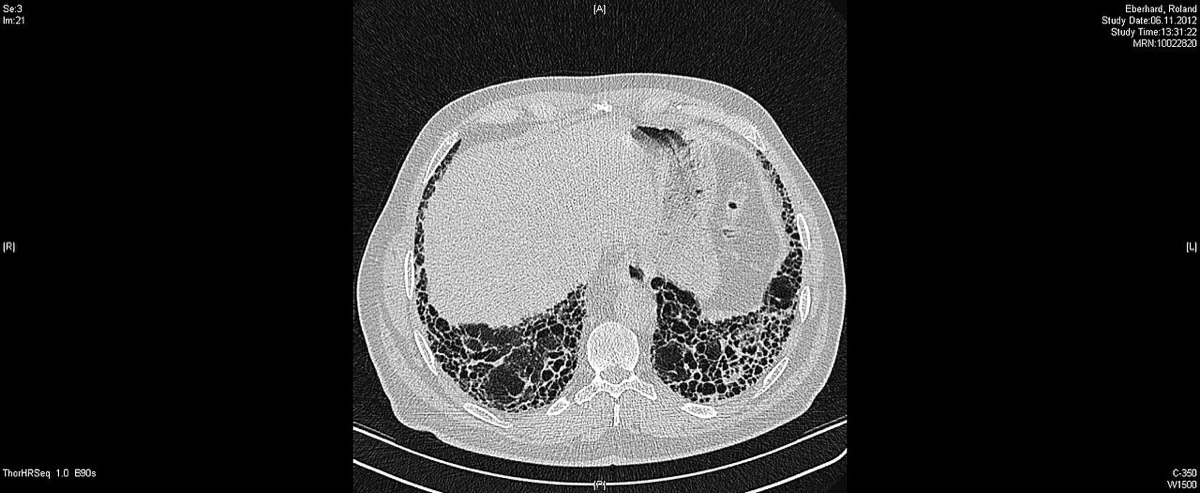
IPF is an age-related lung disease in which fibroblasts multiply and scar-like matrix builds up in lung tissue, causing breathlessness and cough. According to the 2025 report of rentosertib's phase 2a trial, it affects between 10 and 60 people per 100,000 in the United States, is about ten times more common after age 65, and carries a median survival of two to four years after diagnosis. The two standard drugs, nintedanib and pirfenidone, were approved by the FDA in 2014. Trials showed they slow the decline in lung function rather than reverse it.
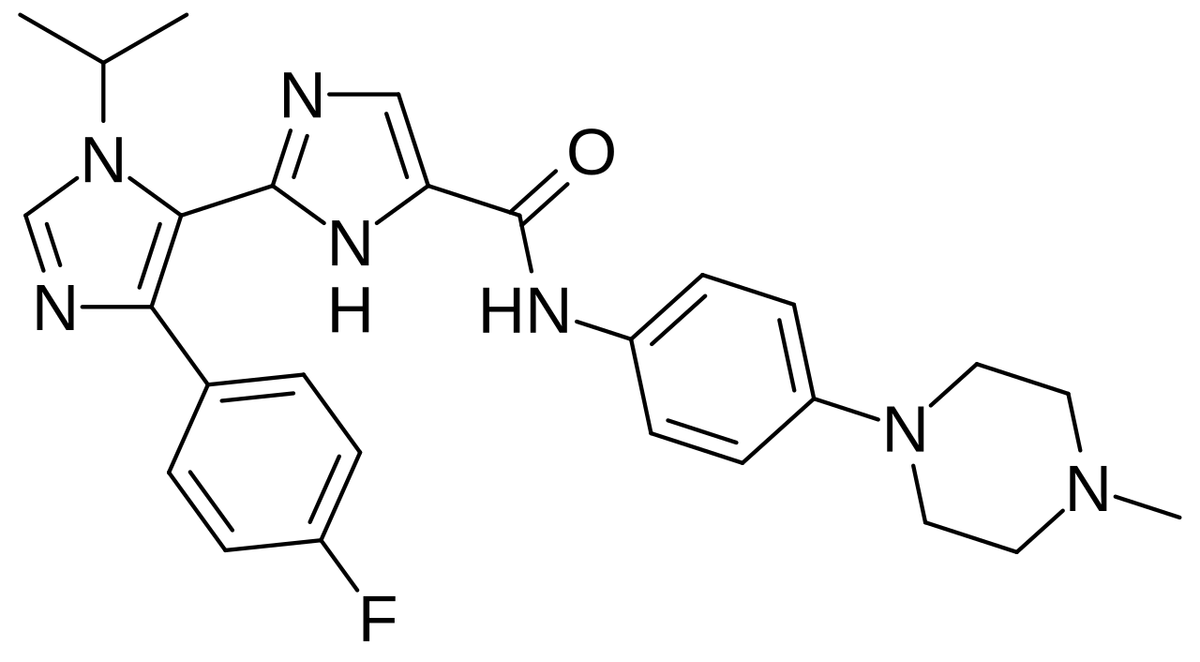
Rentosertib's story began in software. In a paper published in Nature Biotechnology in 2024, Insilico described using its PandaOmics platform, which combines omics data, network analysis and text mined from the literature, to rank possible fibrosis targets. TNIK came out first among kinase candidates even though it had not been studied as an IPF target. The company's Chemistry42 platform then generated small molecules aimed at TNIK's ATP-binding pocket, and lead optimisation produced the compound then called INS018_055. The team says the path from target discovery to a preclinical candidate took roughly 18 months. Phase 1 trials followed in New Zealand, with 78 healthy volunteers, and in China.
The phase 2a trial, reported in Nature Medicine in 2025, randomised 71 patients at 21 sites in China between July 2023 and June 2024. Its primary endpoint was safety: the share of patients with at least one treatment-emergent adverse event. Those rates were similar across arms, from 70.6% on placebo to 83.3% in the two arms taking 60 mg a day, but treatment-related events were more common on the drug, rising to 77.8% in the 60 mg arm against 29.4% on placebo. Sixteen patients stopped treatment early, 12 of them because of adverse events, and seven of those 12 involved liver injury or dysfunction. Diarrhoea and low potassium were among the most common side effects.
| Arm (12 weeks) | Patients randomised | Mean change in FVC |
|---|---|---|
| Placebo | 17 | −20.3 mL |
| 30 mg once daily | 18 | −27.0 mL |
| 30 mg twice daily | 18 | +19.7 mL |
| 60 mg once daily | 18 | +98.4 mL (95% CI 10.9 to 185.9) |
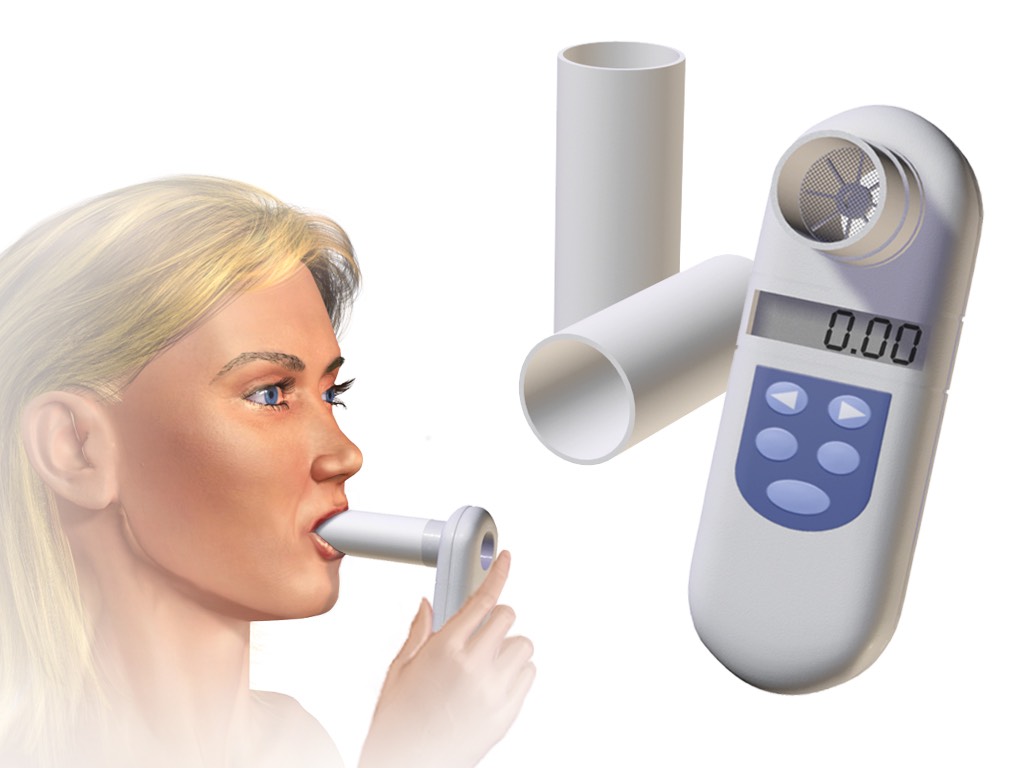
FVC, or forced vital capacity, is measured by blowing hard into a spirometer after a deep breath, and the trial report calls it the gold-standard lung-function measure in IPF. Only the 60 mg arm showed a gain whose confidence interval stayed above zero.
Why aging clocks, and why proteins
Insilico's papers note that TNIK had also been linked to six hallmarks of aging, and the company frames rentosertib as a dual-purpose drug for a disease and for aging biology. The trouble is that ordinary trial endpoints such as lung function cannot show whether a drug changes aging itself. Aging clocks are the field's attempt to fill that gap.
Definition. An aging clock is a statistical model trained on molecular measurements, here blood protein levels, to predict either a person's chronological age or their risk of death. The gap between the predicted value and the real one is read as biological age running fast or slow.
The first widely used clocks, built on DNA methylation, appeared in 2013. The new paper argues that they have produced inconsistent trial readouts, agree poorly with one another and are hard to interpret. Proteins are attractive because they are the molecules that actually do the work in cells, so a clock built on them should be easier to connect to mechanisms.
Proteomic clocks took off after the UK Biobank released plasma protein data in 2023. The best known, ProtAge, was described in Nature Medicine in 2024. Trained on 45,441 UK Biobank participants measured across 2,897 proteins, it uses 204 proteins to predict chronological age with a correlation of 0.94, held up in cohorts from China and Finland, and tracked the risk of 18 chronic diseases and death. Clinical tests of such clocks are still rare. The new paper cites a 12-week exercise study in 26 men in which ProtAge registered a reduction of about ten months.

How the analysis worked
After the trial ended, the 55 patients who completed it were offered consent for an extra proteomic study. Forty-three signed and one was dropped for a missing sample, leaving 42 people: 11 per arm except 9 in the 60 mg group, all Asian, with a mean age of 67.1. Serum drawn at baseline and at weeks 2, 4 and 12 went through the Olink Explore 3072 platform, which after quality control returned levels for 2,841 proteins.
The team then ran six published clocks on those profiles, chosen because they were available when the trial finished and because they differ in design:
| Clock | Trained to predict | Model type |
|---|---|---|
| ProtAge | Chronological age | Deep learning |
| OrganAge (chronological) | Chronological age | Classical machine learning |
| ipfP3GPT | Chronological age | Deep learning |
| PAOPAC | Chronological age | Classical machine learning |
| OrganAge (mortality) | Mortality risk | Classical machine learning |
| PAC | Mortality risk | Classical machine learning |
At baseline the four chronological clocks tracked real age reasonably well, with correlations of 0.70 to 0.84 and errors under four years after correcting for a fixed offset. The two mortality clocks barely tracked calendar age (correlations of 0.16 to 0.23), which the authors expect from models that read a heavy disease burden as extra age. The chronological clocks agreed closely with one another, while their agreement with the mortality clocks was much weaker.
For each clock, the authors computed the change in predicted age from baseline and compared each drug arm with placebo at weeks 2, 4 and 12 using Mann–Whitney tests, correcting for multiple comparisons with the Benjamini–Hochberg method. To find which proteins the drug moved, they fitted a mixed-effects model for every protein with sex and BMI as covariates.
What the clocks showed
Six clocks, three time points and three doses give 54 comparisons. According to the paper, 21 reached significance at a false discovery rate threshold of Q < 0.10, which is looser than the conventional 0.05. A permutation test that shuffled patient labels put the number expected by chance at about 0.15. The effect clustered at week 4, where 11 of 18 comparisons were significant, and the results held when the six patients with more serious adverse events were removed.
| Measure | Result |
|---|---|
| Significant comparisons, all arms | 21 of 54 |
| Significant comparisons at week 4 | 11 of 18 |
| 30 mg twice daily | 9 significant comparisons |
| 60 mg once daily | 7 significant comparisons |
| 30 mg once daily | 5 significant comparisons |
| 60 mg once daily, week 4, four chronological clocks | 2.71 to 3.46 years lower than baseline |
| Week 4 to week 12 | No further significant shift in any arm–clock pair |
The two kinds of clock disagreed about which dose mattered. In the 60 mg arm, all four chronological clocks fell significantly at week 4 while neither mortality clock moved. The 30 mg twice-daily arm was the only one picked up by both kinds, so the authors treat it as the most consistent signal. Insilico's press release puts the peak at roughly three to four years in that arm, and up to six on some clocks.
Organ-level versions of the mortality clocks produced much larger numbers, including reductions of 6.95 to 16.57 years from an artery clock. That spread is a reminder of how much a single estimate depends on which model you pick.
At the protein level, the drug changed the trajectories of 326 proteins against just 2 on placebo. Fibrosis and tissue-remodelling proteins such as COL1A1, MMP10 and FAP fell, as expected from an anti-fibrotic drug. The twice-daily arm had the broadest response, with 142 proteins affected only in that arm, and the 30 mg once-daily arm moved just one protein.
Aging effect or disease effect
The central question is whether the clocks are measuring slower aging or just a less scarred lung. The abstract says plainly that proteomic clocks alone cannot separate the two. The authors offer several indirect arguments:
- Lung function and clock shifts did not line up. The 60 mg arm had the largest FVC gain but a less consistent clock signal than the twice-daily arm. Across patients, change in FVC explained little of the change in predicted age, a median R² of 0.06.
- The drug moved age-linked proteins against the aging direction. In 55,319 UK Biobank adults, 758 proteins changed significantly with age. Proteins moved by rentosertib were 1.74 times more likely than chance to be on that list, and in the twice-daily arm they tended to move opposite to the normal aging trend (Spearman r of −0.30). The 60 mg arm showed no such pattern, and placebo patients drifted in the aging direction.
- Senescence markers fell. A standard panel of senescence-linked proteins called SenMayo rose in the placebo group and fell in the treated groups, significantly in two of the three.
The authors suggest dosing schedule may matter. Rentosertib has a half-life of 7 to 11 hours, and 60 mg once daily reaches peak blood levels two to three times higher than either 30 mg regimen, so two smaller doses give steadier exposure. That is a hypothesis, not a finding.
Key caveat. The most important single protein behind the clock shifts was LTBP2, a regulator of fibrosis, and it is the only important feature present in all six clocks. Their agreement may partly reflect a shared response to the lung disease rather than six independent readings of aging.
Who is behind it and what others said
Insilico is not a neutral party. Its competing-interests statement notes that the company, listed in Hong Kong, has a portfolio of fibrosis programs including rentosertib, and the paper says Insilico is developing the drug for both IPF and aging. Insilico says it now has more than 40 programs aimed at targets linked to both a disease and aging. Its release quotes co-authors who built two of the clocks, from Harvard Medical School and the Peking-Tsinghua Center for Life Sciences, and the Nobel laureate Michael Levitt, who stressed that six clocks from independent groups agreed. The release was timed with a presentation of the results at Sorbonne University in Paris on September 8.

The clocks themselves were built by separate groups, which is a real strength. But developers of several of them are co-authors, and independent commentary at publication was thin. The paper was peer reviewed, and Nature Biotechnology has published the reviewer reports. The Rundown, a technology newsletter, was more measured than the release. It noted that only 21 of 54 comparisons cleared the bar, that support faded by week 12, that a lung-disease protein influenced all six clocks, and that a lower model estimate is not the same as patients gaining healthy years. It also pointed out that the trial cannot speak to long-term safety.
Limitations and open questions
The paper is unusually frank about its weaknesses, and several more follow from the design:
- Small and narrow. Arms of 9 to 11 people, one country, one ethnicity and 12 weeks of follow-up. The proteomic substudy also relied on patients who completed the trial and opted in.
- A loose threshold. Q < 0.10 admits more false positives than the usual 0.05, and the comparisons are correlated because the clocks share proteins.
- No comparison drug. The authors say the clean test would be other anti-fibrotics such as nintedanib or pirfenidone, but comparable proteomic data does not exist.
- TNIK itself is not on the panel. Olink's 3072 assay does not measure TNIK, so target engagement is inferred indirectly.
- Plateau, not progress. Clock estimates stopped improving after week 4 even though many protein changes persisted, and nobody yet knows why.
- Clocks are not outcomes. No clock in this study has been qualified by regulators as a surrogate for health or survival.
What builders can take from it
The clock code is public. The paper uses Insilico's Python library, proteoclock, which standardises implementations of several of the clocks, and links the original repositories for ProtAge, OrganAge, PAC and PAOPAC. The proteomic data is deposited in China's National Center for Bioinformation under accession OMIX008341, with anonymised clock predictions in the supplement. If you work with longitudinal health or biomarker data, that is a ready-made way to try multi-model age estimates and to reproduce the paper's analysis.
The LTBP2 finding is a lesson that applies well beyond biology. Six models agreeing is weaker evidence than it sounds when they share a dominant input, because their errors are correlated. Before you count an ensemble's agreement as independent confirmation, run feature attribution across its members and check which inputs they have in common. The authors did that here, and it is the most useful thing in the paper for judging how much the result is worth.
Two more habits are worth copying. Report every comparison you ran, not only the significant ones, as the paper does with its 54. And test whether your headline effect is explained by an obvious confounder, the way the authors regressed clock change on lung function.
Practical tip. For hackathon teams building health dashboards, show clock outputs as ranges from several models with their training targets labelled, and never as a single "biological age" number.
What to watch
As of September 8, Insilico says rentosertib is in phase 3 development for IPF in China, where lung function, not aging clocks, will decide its future. The authors propose a three-step path for aging claims: collect clock data as exploratory endpoints in disease trials, replicate the effect in people without IPF where lung improvement cannot explain a shift, and then seek regulatory qualification of a biomarker or a composite clinical endpoint. The second step is the one that would test this result.
Sources
- Integration of proteomic aging clocks in a phase 2a clinical trial supports simultaneous geroprotective assessment (Nature Biotechnology, Sep 7, 2026)
- Insilico's AI-driven IPF candidate rentosertib shows potential for biological age reversal (Insilico Medicine press release, Sep 7, 2026)
- Insilico's AI-designed drug shows an early aging signal in lung disease patients (The Rundown, Sep 8, 2026)
- A generative AI-discovered TNIK inhibitor for idiopathic pulmonary fibrosis, a randomized phase 2a trial (Nature Medicine, 2025)
- A small-molecule TNIK inhibitor targets fibrosis in preclinical and clinical models (Nature Biotechnology, 2024)
- Proteomic aging clock predicts mortality and risk of common age-related diseases in diverse populations (Nature Medicine, 2024)
More from the blog
Science ·
Anthropic's wet lab reports a CRISPR-like enzyme family surfaced by Claude agents
About 950 Claude agent sessions mined sequence data for reverse transcriptases and flagged ART, a phage system with CRISPR-like repeats. Humans ran the experiments, and its function is unknown.
11 min read

Science ·
MIT and Oak Ridge's CrysVCD builds charge balance into AI crystal generation
A small transformer writes charge-balanced formulas before a diffusion model builds the crystal. Tuned for stability, 85% of outputs were predicted metastable. The code is open.
10 min read

Science ·
Google DeepMind's cyclone model gets a Nature paper and open weights
WeatherNext Cyclones gained a day or more of lead time over leading operational models on 2023 to 2025 storms. The code and weights are now on GitHub.
12 min read