Science
A machine-learning screen leads physicists to two new kagome superconductors
An Aalto-led team screened thousands of kagome compounds with ML and physics calculations, then Rice University made the best bets. Two superconduct, below 1 kelvin.
HackHoster Team · · 10 min read
At a glance
- YRu3B2 and LuRu3B2 become superconducting at 0.81 K and 0.95 K, according to a paper published in Physical Review Research on June 17, 2026.
- An earlier high-throughput study flagged 428 likely superconductors among 3,063 stable compounds in the 1:3:2 kagome family.
- Rice University arc-melted both compounds and confirmed bulk superconductivity with magnetization, specific heat and resistance measurements.
- The calculations overestimated the transition temperatures by a factor of two to four, which the authors trace to exaggerated phonon softening.
- Aalto says more than 7,000 superconductors are known, but theory predicted only about 20 of them before they were found.
Researchers have found two new superconductors, YRu3B2 and LuRu3B2, by predicting them first and making them second. A computational screen of a whole family of kagome materials, accelerated with machine learning and checked with physics calculations, pointed the team to the yttrium compound. Emilia Morosan's group at Rice University then made it and its lutetium sibling. Yttrium-ruthenium boride becomes superconducting at 0.81 kelvin and the lutetium version at 0.95 kelvin.
The paper appeared in Physical Review Research on June 17, and Aalto University in Finland announced it on June 29. The authors come from Rice, Aalto, the Donostia International Physics Center in Spain, Ruhr University Bochum and Princeton. The work is part of SuperC, a consortium led by Aalto physicist Päivi Törmä with the stated goal of finding a room-temperature superconductor by 2033.
According to Aalto, more than 7,000 superconductors have been identified over the decades, mostly by accident, and theory has predicted only about 20 of them ahead of time. Two more hits from a prediction-led search is a small number, but it is a real addition to a very short list, and the method matters more than the materials.
Why predicting superconductors is hard
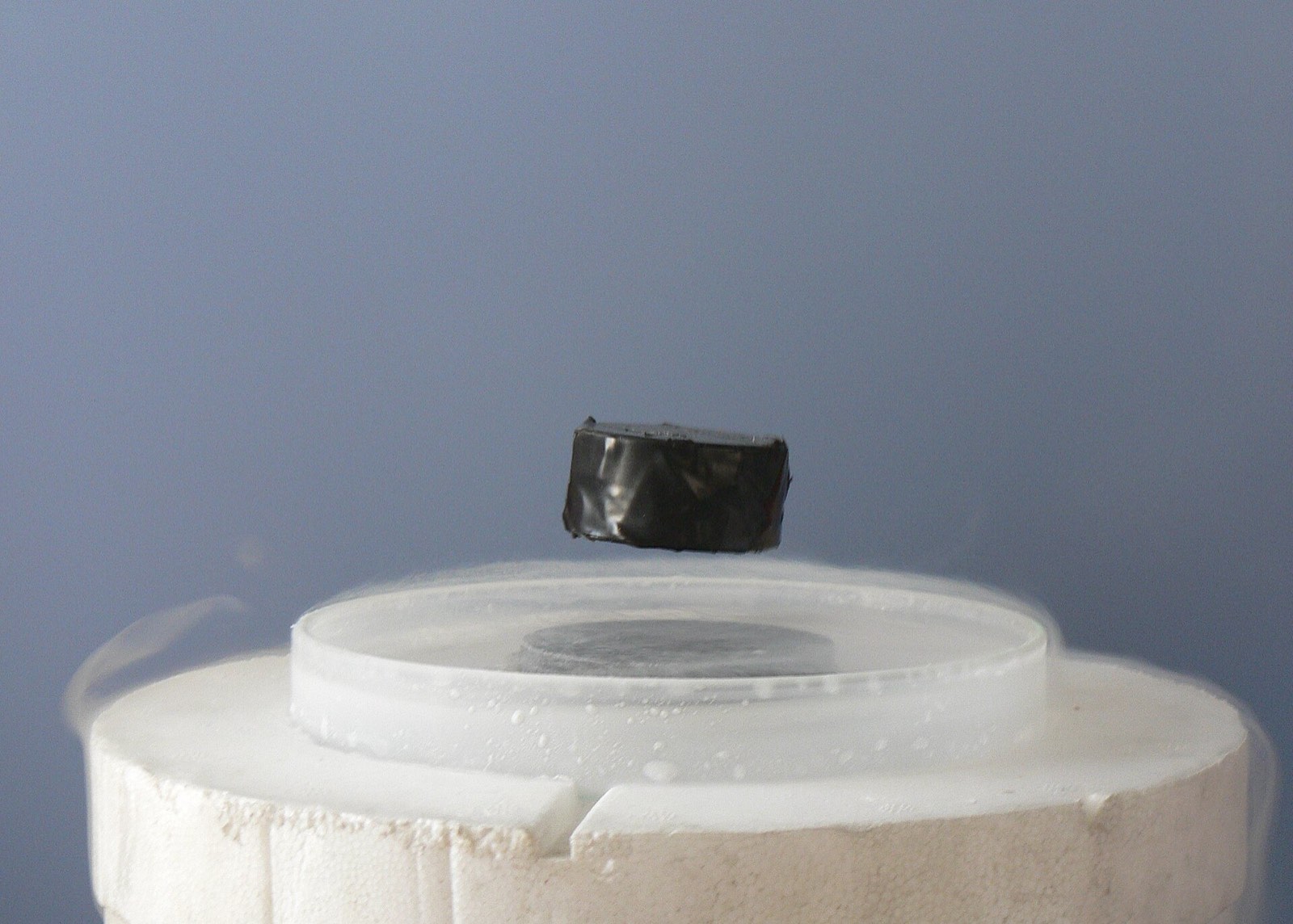
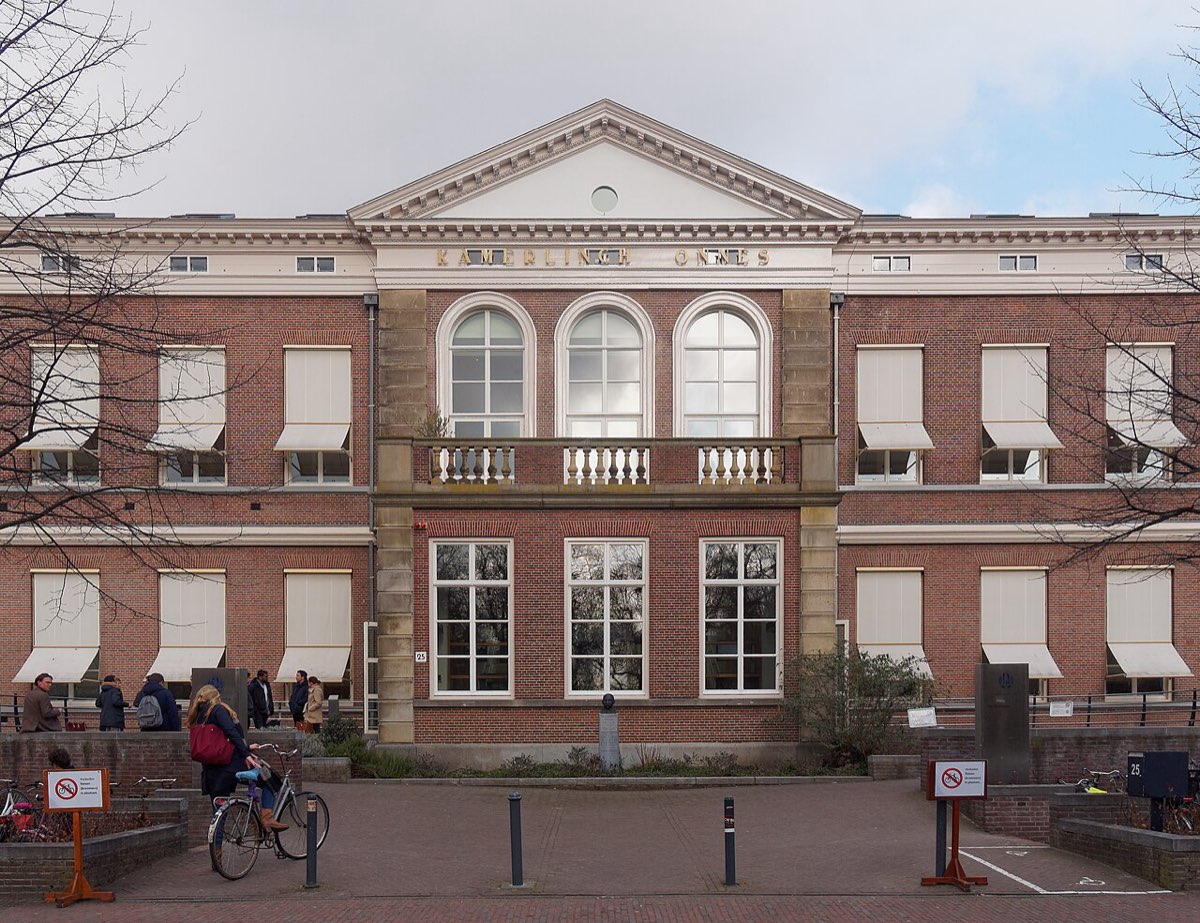
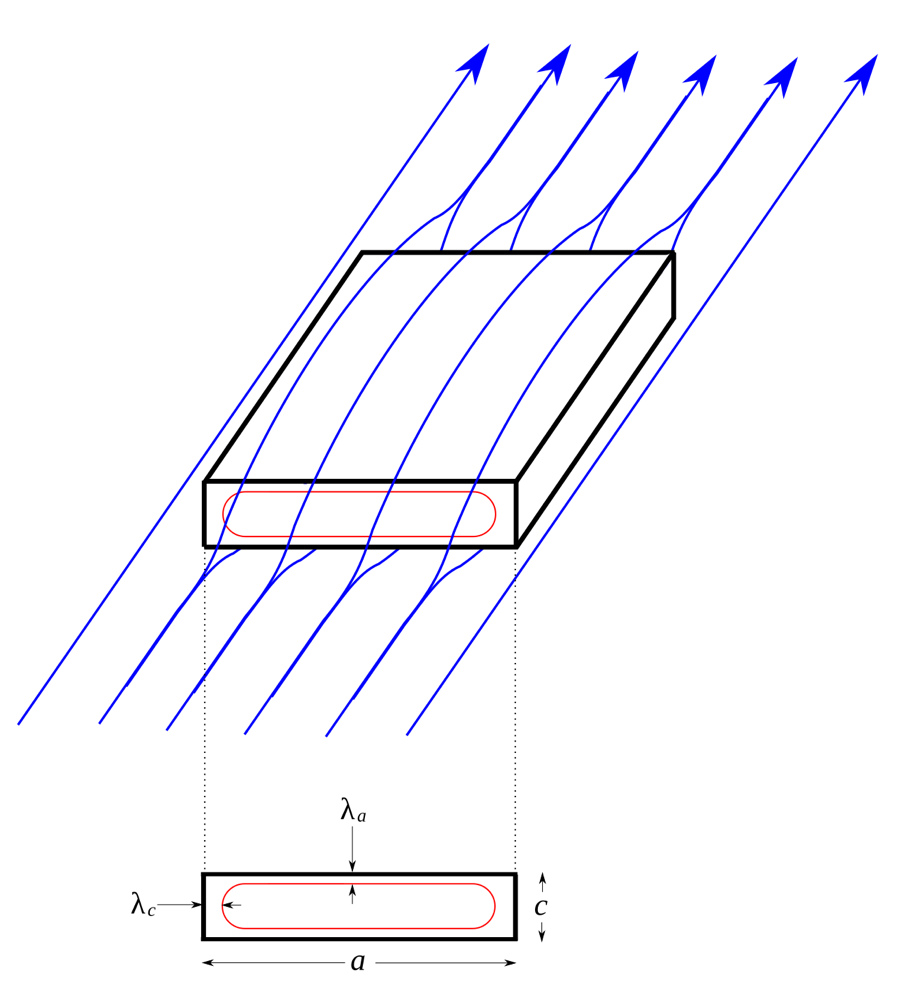
Superconductivity has a long history of surprises. Heike Kamerlingh Onnes found it in 1911, when mercury cooled with liquid helium lost all electrical resistance at 4.2 K. In 1933, Walther Meissner and Robert Ochsenfeld showed that superconductors also push magnetic fields out, which is why a magnet can float above one, as in the photo at the top of this page.
A full microscopic theory arrived in 1957. The BCS theory, named after John Bardeen, Leon Cooper and John Robert Schrieffer, explains conventional superconductivity as electrons forming pairs through their interaction with vibrations of the crystal lattice, called phonons. But as the new paper's introduction notes, knowing the mechanism did little to predict which materials would superconduct. The cuprates found in 1986, the iron pnictides, heavy-fermion and organic superconductors, the recent nickelates and even the conventional superconductor MgB2 were all accidental discoveries.
The exception is hydrogen-rich compounds. Calculations from first principles predicted them before anyone made them, and hydrides now hold the record transition temperatures. Wikipedia's summary notes that hydrogen sulfide reached 203 K in 2015, but only under about 90 gigapascals of pressure, far beyond anything usable in a device.
The bottleneck is computational. The standard first-principles route to a conventional superconductor's transition temperature uses density functional theory to compute the electron-phonon coupling, and the paper's authors describe the cost of those calculations, set against the vastness of materials space, as a fundamental bottleneck. Machine learning offers a cheap first pass that ranks candidates before the expensive calculation runs.
What makes these materials kagome superconductors
A kagome lattice is a two-dimensional pattern of corner-sharing triangles around hexagonal holes, named after a traditional Japanese basket-weave. In these compounds, which crystallize in a hexagonal structure of the CeCo3B2 type, the ruthenium atoms form flat kagome sheets.
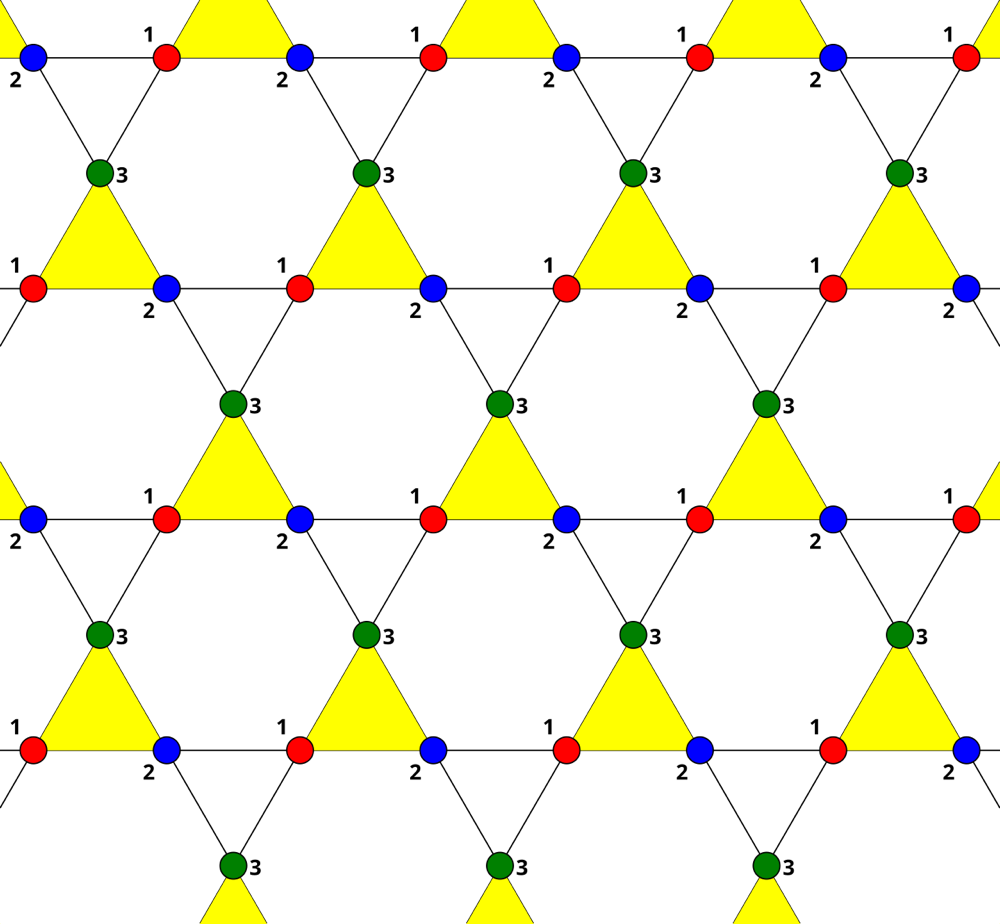
That geometry tends to produce quasi-flat electronic bands, in which many electron states sit at nearly the same energy. A flat band near the Fermi level means a large density of states, so electrons have many states to pair into, which can strengthen superconductivity.
Flat bands and quantum geometry. In an ordinary metal, electrons carry supercurrent because they move easily through the crystal. In a perfectly flat band they barely move at all. Törmä and colleague Sebastiano Peotta showed in 2015 that a property called quantum geometry can still let flat-band electrons carry supercurrent, according to Aalto. SuperC's bet is that this effect can be designed into materials to raise transition temperatures.
The paper checked for that quantum-geometric contribution and is candid that it did not do much here. Its calculations show the superfluid weight in both compounds is dominated by the ordinary contribution. The authors explain that quantum geometry only becomes important when the pairing gap is comparable to or larger than the bandwidth, and the bands near the Fermi level in these compounds are not flat enough for that.
The pipeline: a cheap filter in front of an expensive simulation
If you have ever put a fast classifier in front of an expensive model call, the structure will look familiar. It ran in three stages.
1. Screening the family. In a March 2025 preprint, many of the same authors reported a high-throughput screen of the 1:3:2 kagome family, compounds whose elements come in a 1:3:2 ratio. It identified 3,063 stable materials, of which 428 were predicted to superconduct above 1 K, with the highest predictions reaching about 15 K. The new paper describes that screen as machine-learning accelerated. The same preprint worked out the theory of a related compound, LaRu3Si2, a known kagome superconductor at about 7 K, where coupling between specific ruthenium vibrations and electrons drives the pairing.
2. Refined calculations. For promising candidates, the team ran detailed density functional theory calculations of the band structure, the phonons and the electron-phonon coupling. The methods section lists the stack: VASP for electronic structure, Quantum ESPRESSO with the EPW package for phonons and electron-phonon coupling, and Wannier functions to interpolate onto fine grids.
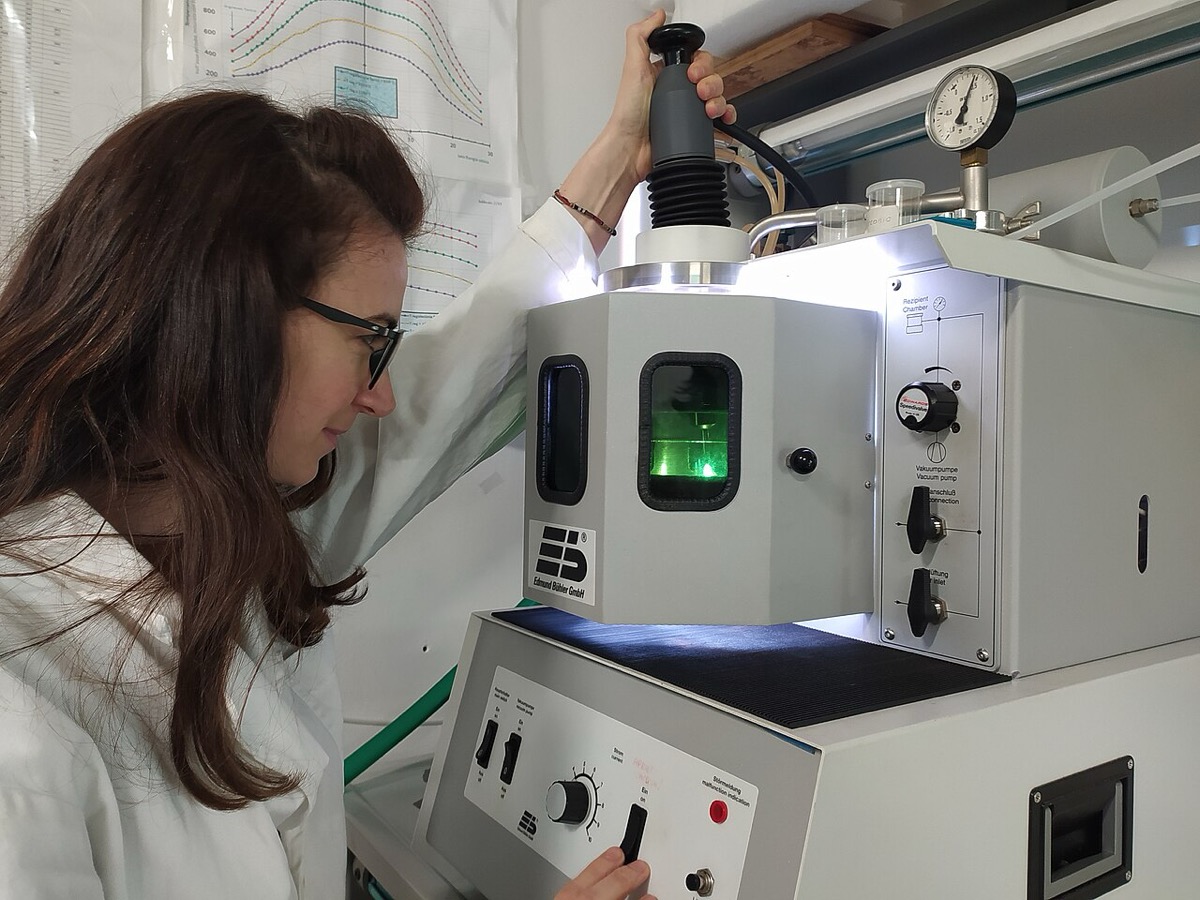
3. Synthesis and measurement. At Rice, the team arc-melted high-purity yttrium or lutetium, ruthenium and boron in a 1:3:2 ratio on a water-cooled copper hearth under argon, remelting several times for homogeneity. X-ray powder diffraction confirmed the structure. Magnetization, specific heat down to 60 millikelvin and electrical resistance then tested for superconductivity.
How the team knew it was real
The paper relies on three independent signatures. Resistance dropping to zero shows current flowing without loss, but a thin superconducting path through an otherwise ordinary sample can produce that on its own. Magnetization shows the Meissner effect, the expulsion of magnetic field, and lets the team estimate what fraction of the sample superconducts. Specific heat is the strongest test, because a jump in heat capacity at the transition is a property of the bulk material rather than of a filament or an impurity. Both compounds passed all three. The transition temperatures from the three measurements line up once the small magnetic field applied during the magnetization run, which slightly lowers the transition, is taken into account.
There is one wrinkle in the story. According to the paper, the lutetium compound was initially left off the high-throughput shortlist, because its calculated phonon spectrum showed weakly imaginary modes, a sign that the structure might be unstable at low temperature. The team made it anyway, alongside the yttrium compound, and it turned out to be the better superconductor of the two. A screen that discards anything with a hint of instability can miss real materials.
Törmä's argument for the approach is about volume. Because machine learning does the first pass, she told Aalto, the number of materials the team can process could reach into the billions.
The numbers
Both compounds showed bulk superconductivity, meaning most of the sample superconducts rather than a thin film or impurity phase. The superconducting fraction was close to 100% for the yttrium sample and about 90% for the lutetium sample.
| Property | YRu3B2 | LuRu3B2 |
|---|---|---|
| Transition temperature, specific heat at zero field | 0.81 K | 0.95 K |
| Resistance reaches zero | about 0.84 K | about 1.04 K |
| Superconducting volume fraction | close to 100% | about 90% |
| Lower critical field at 0 K | 52 Oe | 59 Oe |
| Upper critical field at 0 K | 1,000 Oe | 867 Oe |
| Electron-phonon coupling, from experiment | 0.44 | 0.41 |
| Electron-phonon coupling, from calculation | 0.477 | 0.561 |
| Penetration depth, experiment and theory | 32.6 nm and 32 nm | 32 nm and 36 nm |
The specific-heat jump at the transition came out at 1.1 and 1.26 in the standard normalized units, slightly below the textbook BCS value of 1.43. The authors suggest grain boundaries in their polycrystalline samples or an uneven superconducting gap as possible reasons. Their calculations do predict a two-gap structure, with a gap of about 0.8 meV on some parts of the Fermi surface and about 0.1 meV on others.
The comparison with LaRu3Si2 explains why these compounds superconduct so weakly:
| Quantity | LaRu3Si2 | YRu3B2 | LuRu3B2 |
|---|---|---|---|
| In-plane lattice constant, calculated | 5.715 Å | 5.504 Å | 5.476 Å |
| Width of the quasi-flat band | about 0.3 eV | about 0.7 eV | about 0.7 eV |
| Density of states from that band, states/eV/spin | 1.589 | 0.754 | 0.753 |
| Calculated electron-phonon coupling | 0.831 | 0.477 | 0.561 |
Smaller yttrium and lutetium atoms squeeze the lattice. That widens the nearly flat band, cuts that band's contribution to the density of states at the Fermi level roughly in half, and, together with stiffer lattice vibrations from the lighter boron atoms, weakens the electron-phonon coupling. The trend matches a related experiment the authors cite: in the silicides, swapping lanthanum for the smaller yttrium, from LaRu3Si2 to YRu3Si2, shrinks the in-plane lattice constant from 5.715 to 5.472 Å and lowers the transition temperature from 6.8 K to 3.4 K. These are conventional superconductors found by an unconventional search.
Open questions and caveats
Key caveat. The predictions overshot. Refined calculations in the paper put the transition temperatures between about 1.9 and 3.4 K, two to four times the measured values, and the original high-throughput run had estimated about 6.8 K for YRu3B2 using coarser grids.
The authors trace the gap to their calculations exaggerating the softening of certain lattice vibrations near a structural instability, which inflates the computed coupling. They note that matching the measured temperatures would require a Coulomb repulsion parameter of about 0.14 for the yttrium compound and 0.17 for the lutetium one, higher than the 0.1 they assumed. A screen that ranks candidates in the right order is still useful when its absolute numbers are off, but it means the lab stays in the loop.
The yttrium result is also not unique to this team. A separate team, Tobi Gaggl, Max Hirschberger and colleagues, posted a preprint on December 10, 2025, six days before the Rice and Aalto preprint, reporting bulk superconductivity in YRu3B2 at about 0.7 K from the same three kinds of measurement. The Rice and Aalto paper cites it. Two independent observations strengthen the result. The Gaggl preprint does not mention machine learning; its abstract points instead to the compound's structurally pristine kagome lattice and to earlier work on LaRu3Si2, a reminder that conventional chemical intuition was heading the same way.
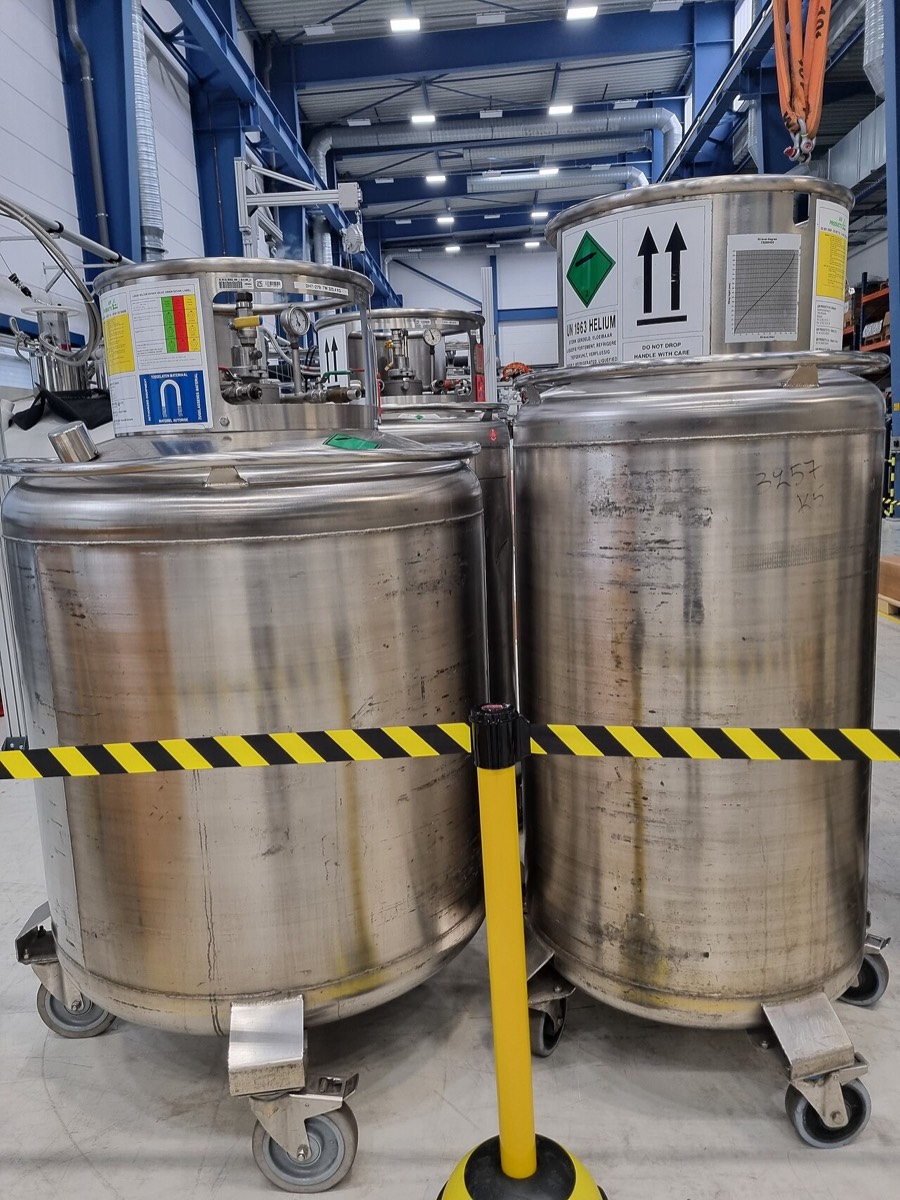
The transition temperatures themselves are far from practical. Both are below 1 K, much colder than liquid helium at 4.2 K. Aalto's 2025 overview of SuperC makes the stakes clear: today's superconductors need expensive cooling, often with non-renewable helium, and a material that works at room temperature would change energy use in computing, quantum technology and fusion magnets. Nobody should read this result as a direct step toward that. It is a test of whether the search method works.
And the search covered one chemical family. Showing that the same pipeline finds superconductors across many structure types, at higher temperatures, is the part that will decide whether the 2033 goal is ambitious or merely optimistic. The authors themselves note that the 1:3:2 family is small enough for current computational methods, and that the approach becomes more valuable in much larger materials spaces where exhaustive first-principles calculations are too expensive.
Who is behind it
The experimental work was led by Morosan at Rice, with Rose Albu Mustaf and Sajilesh K. P. as co-first authors. The theory came from Törmä's group at Aalto, B. Andrei Bernevig at Princeton and the Donostia International Physics Center, and Miguel Marques at Ruhr University Bochum. According to Aalto's February 2025 profile, SuperC brings together 14 research groups in Europe and the US with more than 50 researchers, and a related Simons Foundation collaboration on superconductivity is headed by Bernevig with Törmä as co-director. Funders listed in the paper include the Kavli Foundation, the Klaus Tschira Stiftung, Kevin Wells and several Finnish foundations.
What builders can take from it
For builders interested in AI for science, the useful lesson is the shape of the system, not the materials. A learned model narrows a huge space, a trusted but slow simulator checks the shortlist, and a physical experiment gives the final answer. Each stage's error rate and cost determines how wide the funnel can be, and that applies just as well to drug candidates, catalysts or battery chemistries.
A few concrete lessons from this paper:
- Measure ranking, not just accuracy. The calculations were off by a factor of two to four in absolute terms and still pointed to real superconductors. For a screening model, how well it orders candidates matters more than how close its numbers are.
- Log what your filters throw away. The lutetium compound was nearly lost to a stability filter. Keep rejected candidates and the reason for rejection, and sample from them occasionally.
- Budget for the expensive stage. The refined calculations needed fine grids, and the authors show the coarse high-throughput settings gave a much higher temperature. Know which stage your answer is sensitive to.
- Close the loop with the lab. The experimental coupling constants of 0.44 and 0.41 sit close to the calculated 0.477 and 0.561. That kind of comparison is the training signal a better screen needs.
Practical tip. If you build a screening tool at a hackathon, report precision at the top of your ranked list, for example how many of your top 10 candidates pass the next check. That is the number an experimental group will care about before spending weeks in the lab.
What to watch
As of June 30, the clearest next test is whether the SuperC pipeline produces predicted superconductors outside the 1:3:2 kagome family, and whether any of the 428 candidates from the 2025 screen with higher predicted temperatures hold up in the lab. The other thing to watch is the gap between prediction and measurement: if refined calculations that handle near-unstable lattices better can close the factor of two to four seen here, the funnel can be trusted further from the lab.
Sources
- Researchers identify new superconductors, unlocking process that could yield thousands more (Aalto University)
- Researchers identify new superconductors (EurekAlert news release)
- Machine-learning-guided discovery of kagome superconductors YRu3B2 and LuRu3B2 (Physical Review Research)
- Preprint of the same paper with full methods (arXiv)
- Theory of superconductivity in LaRu3Si2 and predictions of new kagome flat band superconductors (arXiv, March 2025)
- Bulk superconductivity in the kagome metal YRu3B2 (arXiv, December 2025)
- Professor Päivi Törmä and the SuperC consortium pursue room-temperature superconductivity (Aalto University, February 2025)
- Superconductivity (Wikipedia)
More from the blog
Science ·
Anthropic's wet lab reports a CRISPR-like enzyme family surfaced by Claude agents
About 950 Claude agent sessions mined sequence data for reverse transcriptases and flagged ART, a phage system with CRISPR-like repeats. Humans ran the experiments, and its function is unknown.
11 min read
Science ·
Six proteomic aging clocks read younger in rentosertib's lung fibrosis trial
A Nature Biotechnology study ran six protein-based aging clocks on serum from Insilico's IPF drug trial. The signal is consistent but small, early and hard to separate from the lung disease.
11 min read
Science ·
MIT and Oak Ridge's CrysVCD builds charge balance into AI crystal generation
A small transformer writes charge-balanced formulas before a diffusion model builds the crystal. Tuned for stability, 85% of outputs were predicted metastable. The code is open.
10 min read