Science
An OpenAI model disproved Erdős's unit distance conjecture, and mathematicians checked the proof
OpenAI says a general-purpose reasoning model found point sets with far more unit distances than Erdős believed possible. Nine mathematicians published a verified write-up the same day.
HackHoster Team · · 10 min read

At a glance
- On May 20, 2026, OpenAI said an internal general-purpose reasoning model disproved the unit distance conjecture that Paul Erdős posed in 1946.
- The model showed that some arrangements of n points have at least n^(1+ε) pairs exactly one unit apart, for a fixed ε above zero.
- Nine mathematicians, including Noga Alon, Timothy Gowers and Melanie Matchett Wood, posted a 19-page human-verified version of the proof the same day.
- Will Sawin posted a separate paper proving the count can exceed n^1.014, while the best upper bound remains about n^(4/3) from 1984.
- The construction replaces Erdős's square grid with number fields of growing degree built from Golod–Shafarevich class field towers.
On May 20, OpenAI said an internal, general-purpose reasoning model had produced a proof that disproves the unit distance conjecture, a geometry problem Paul Erdős posed in 1946. The model built an infinite family of point arrangements in the plane with more pairs at distance exactly 1 than Erdős thought possible. TechCrunch reports that OpenAI described it as the first time AI had autonomously solved a prominent open problem.
The claim did not arrive alone. The same day, nine mathematicians posted a paper on arXiv with a short, human-verified version of the AI's argument and a set of personal reflections on it: Noga Alon, Thomas Bloom, Timothy Gowers, Daniel Litt, Will Sawin, Arul Shankar, Jacob Tsimerman, Victor Wang and Melanie Matchett Wood. Sawin also posted a separate paper that turns the result into an explicit number. On May 21, combinatorialist Gil Kalai called the result a possible scientific landmark on his blog and compared it with the computer-assisted proof of the four color theorem in 1976.
The problem, without the jargon
Put n dots anywhere on a flat surface. Count the pairs of dots that are exactly 1 unit apart. The question is how large that count can get as n grows.
Dots in a straight line, spaced one unit apart, give n − 1 pairs. Smarter arrangements do better. Erdős showed in 1946 that a square grid of points, scaled to the right size, gives about n^(1 + c / log log n) pairs. That is only barely more than linear: the extra bit in the exponent shrinks toward zero as n grows. He conjectured that nothing can do fundamentally better, meaning the true maximum is n^(1 + o(1)), where o(1) stands for a quantity that tends to zero.
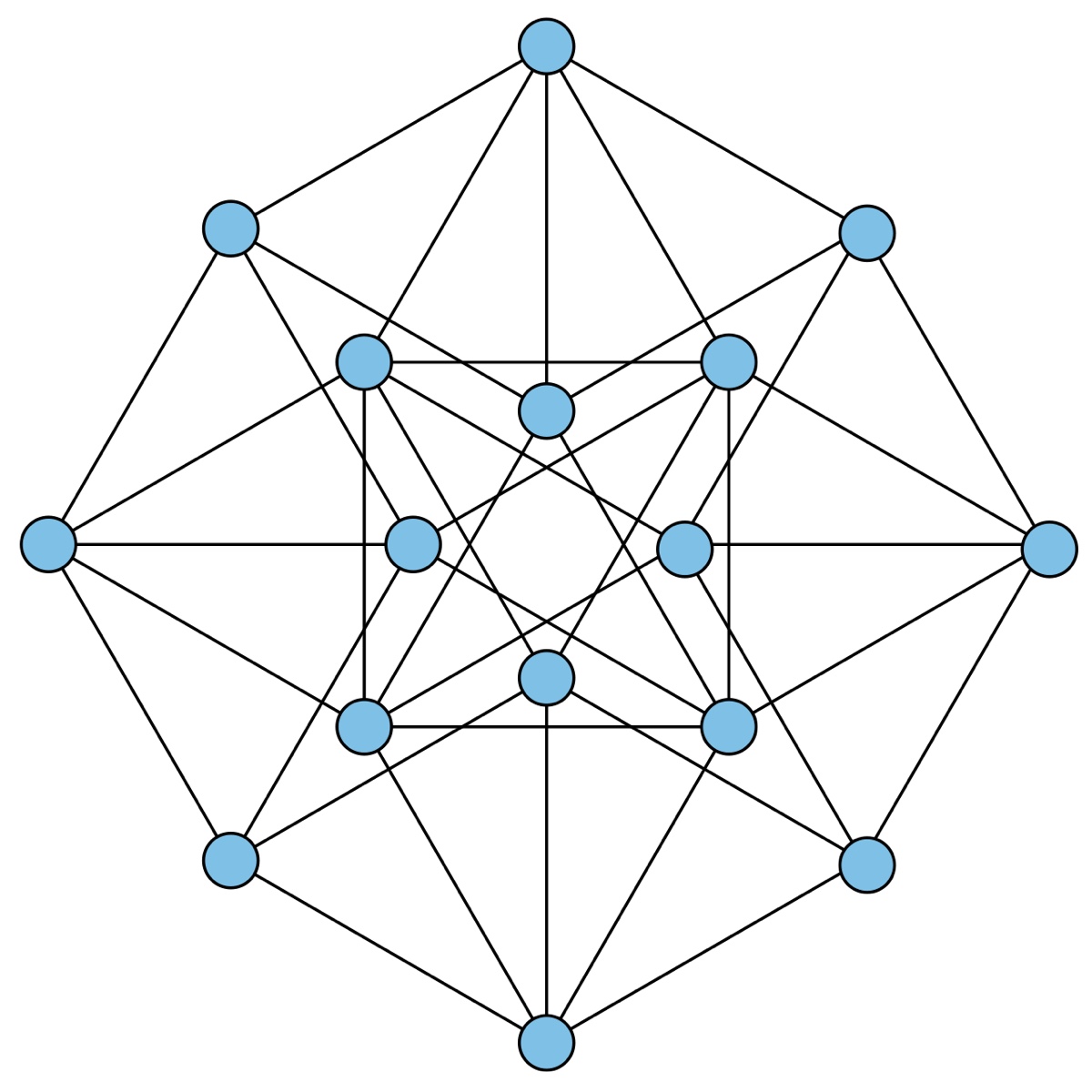
Small cases have been worked out exactly. Wikipedia's table of the maximum number of unit distances runs 1, 3, 5, 7, 9, 12 for two through seven points and reaches 41 for sixteen points. The hard part is the asymptotic behavior, the growth rate for very large n.
Eighty years of bounds
| Year | Who | Result |
|---|---|---|
| 1946 | Paul Erdős | Grid construction with n^(1 + c / log log n) unit distances; conjecture that this is essentially the maximum |
| 1983 | Endre Szemerédi and William Trotter | Theorem bounding how many times n points can lie on m lines |
| 1984 | Joel Spencer, Szemerédi and Trotter | Upper bound of order n^(4/3) unit distances |
| 1997 | László Székely | Much shorter proof of the Szemerédi–Trotter theorem using crossing numbers of graphs |
| May 20, 2026 | OpenAI model, checked by nine mathematicians | At least n^(1+ε) for a fixed ε > 0, disproving the conjecture |
| May 20, 2026 | Will Sawin | Explicit lower bound above n^1.014 |
For four decades the truth was known to sit somewhere between slightly more than n and n^(4/3), and the nine authors write that most experts, following Erdős, assumed the lower end was right and tried to prove it rather than look for a counterexample.

The upper bound side has its own history. Szemerédi and Trotter's 1983 incidence theorem limits how many point-on-line coincidences n points and m lines can produce, and Spencer, Szemerédi and Trotter proved the n^(4/3) unit distance bound the following year. In 1997 László Székely found a much simpler proof of the incidence theorem using crossing numbers of graphs. None of that work could rule out the possibility that the grid was simply not the best construction.
Why a grid is really about number theory
Erdős's grid can be read as the Gaussian integers, numbers of the form a + bi where a and b are whole numbers. The distance between two grid points is the absolute value of their difference, so counting unit distances in a scaled grid comes down to counting ways a number can be written as a sum of two squares. The remarks paper explains that Erdős exploited integers with unusually many such representations: each representation contributes unit distances.
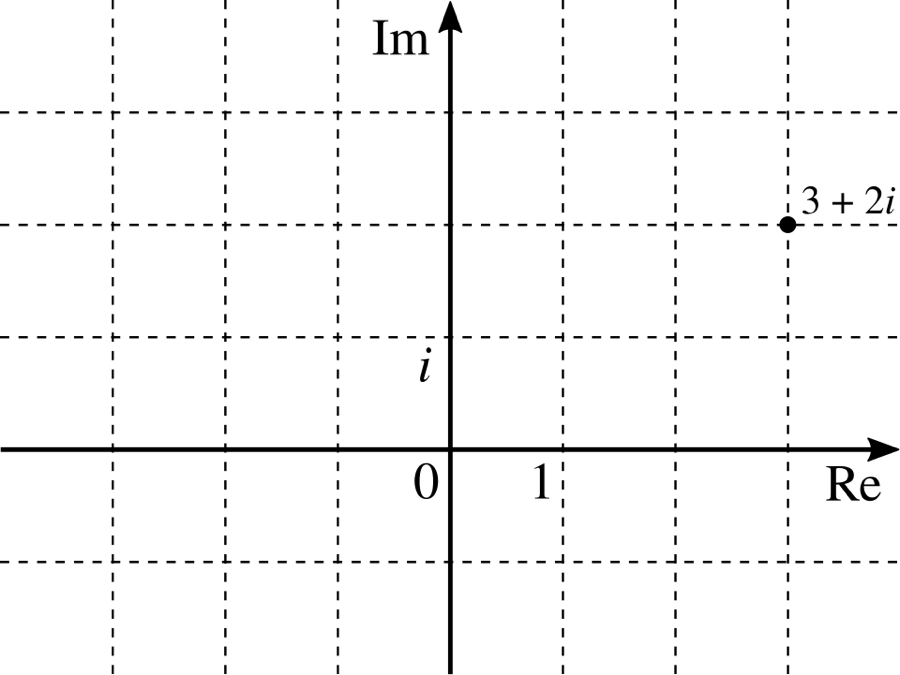
That reading suggests a generalization: replace the Gaussian integers with the integers of a bigger number field. Sawin explains in his reflection why few people pursued it. For any single field of fixed degree, the resulting bounds did not obviously get better as the degree went up, so there was little reason to think a cleverer choice of field would beat the grid. The breakthrough was to stop fixing the field and instead let its degree grow without bound.
What the model found
The main theorem in the nine-author note says there is a fixed ε > 0 and an infinite sequence of point sets in the plane, growing without bound, in which the number of unit distances is at least n^(1+ε). The bonus in the exponent no longer fades away, and that breaks the conjecture.
The construction works roughly like this, following the note:
- Start with CM fields. These are number fields with a well-behaved complex conjugation. In such a field, an element that has absolute value 1 in one complex embedding has absolute value 1 in all of them, which makes "unit length" a property of the number itself.
- Manufacture many elements of absolute value 1. If a rational prime splits into many prime ideals in the field, products of those primes and their conjugates yield many elements of absolute value 1, each one a candidate unit-length step. The count is reduced by the field's class number.
- Grow the degree without blowing up the discriminant. Golod and Shafarevich proved in 1964 that class field towers, built by repeatedly taking a field's Hilbert class field, can be infinite. That supplies fields of ever larger degree whose root discriminants stay bounded, while a chosen prime keeps splitting completely, so the supply of unit-length steps grows with the degree.
- Turn algebra into geometry. The field's integers sit as a lattice inside a space of several complex coordinates. Take the lattice points inside a bounded region, then keep only one complex coordinate, which places every point in the ordinary plane. Differences equal to the special elements become unit distances.
- Count. Lemmas in the note compare the number of unit-distance pairs with the number of points; with the parameters chosen correctly, the ratio beats any n^(1+o(1)) bound.
Definition: a number field is a system of numbers obtained by adjoining roots of polynomials to the rationals, like the Gaussian integers' field obtained by adjoining i. Its degree measures how big the extension is, and its discriminant measures how complicated its arithmetic is. The proof needs degree to go up while the discriminant, per degree, stays under control.
The AI's argument showed such an ε exists, and the note's parameter choice makes it explicit but tiny: an exponent of about 1 + 6.24 × 10⁻³⁸. Sawin's separate paper, using fields of large degree and small discriminant with many primes of small norm, pushes it to more than n^1.014.
The authors stress that the ingredients were known. They trace the key ideas to earlier work by Ellenberg and Venkatesh, by Golod and Shafarevich, and by Hajir, Maire and Ramakrishna. What was new was combining them for this problem and pushing the construction through.
How the proof was produced and checked
According to the note, the argument was first generated in a single attempt by an internal OpenAI model and then refined for exposition through human interactions with Codex, OpenAI's coding tool. The authors then wrote a human-digested version that is somewhat simplified and somewhat generalized. Their note runs 19 pages including the reflections, and Wang observes that the proof itself is short and needs graduate-level background. Checking it took real time because of the prerequisites, but the authors describe the process as relatively smooth, which they credit to the clean presentation. The note does not mention a computer-checked formalization.
OpenAI described the system only as a general-purpose reasoning model, and the company framed the result as evidence that AI can sustain long chains of reasoning and connect distant fields, according to TechCrunch.
Why this claim is being taken seriously
OpenAI has history here. As TechCrunch recounts, in October 2025 then-OpenAI executive Kevin Weil claimed GPT-5 had solved 10 open Erdős problems and made progress on 11 more. The solutions turned out to exist already in the literature, Weil deleted the post, and Bloom, who runs the Erdős Problems website, called it "a dramatic misrepresentation."
This time the announcement came with endorsements from Alon, Wood and Bloom, a human-checked write-up from nine named mathematicians, and an independent improvement within a day. It is also a disproof by construction, the easiest kind of claim to check: you exhibit the objects and verify that they work.
What the mathematicians said
The reflections section is the most unusual part of the note. Each author wrote separately, and they do not all agree on what the result means.
- Noga Alon calls it an outstanding achievement that settles a long-standing problem, and credits the model's willingness to try long-shot counterexample approaches where excellent human researchers had tried and failed.
- Thomas Bloom points out that the construction needed several unlikely things at once: sustained work on an open problem, real doubt about Erdős's belief, a willingness to generalize the original lattice, and deep familiarity with class field theory. He describes the model's advantage as a kind of superhuman patience on paths people dismiss.
- Timothy Gowers cautions against overreading it. He proposes measuring a proof's difficulty by what he calls Kolmogorov complexity modulo experts, roughly the length of the shortest set of hints that would let experts reconstruct it, and suggests this proof may be impressive yet low on that scale.
- Daniel Litt says it is the first AI result he finds exciting in itself rather than as a sign of things to come, and adds that it should make mathematicians uncomfortable about specialization and incentives.
- Jacob Tsimerman says he briefly tried this kind of construction himself and found the space of parameters intimidating, which is where the model kept going.
- Melanie Matchett Wood argues that if the expertise on the note had been assembled to look for a counterexample a month earlier, the mathematicians would have found it, but that no such group would have formed on its own. She also raises how AI systems should credit prior work they have absorbed.
- Victor Wang notes that formalization will need to keep pace with results like this.
Limits and open questions
- The model is internal. OpenAI describes it only as a general-purpose reasoning model, and outsiders cannot use it or rerun the search.
- The exponent is far from settled. The truth now lies somewhere between n^1.014 and n^(4/3). Sawin's explicit 1.014 is already far above the note's tiny value, and further gains are an obvious target.
- Related problems look harder. Sawin explains why the same approach does not readily extend to Erdős's distinct distances problem or to unit distances in three dimensions.
- Formal verification. The proof was checked by human experts in the traditional way, not in a proof assistant.
- Attribution. Wood's point about citations matters beyond this paper. A model trained on the literature may use ideas without signaling where they came from, and the field has no settled norms for that yet.

What builders can take from it
The lesson for builders is the pairing. The model searched a direction human experts had reasons to skip and produced a candidate. People with the right background turned it into a short, checked proof and an explicit bound within a day. That propose-and-verify loop applies well beyond mathematics, wherever an answer is expensive to find but cheap to check.
- Separate the generator from the checker. Let a model propose freely, then verify with something it cannot talk its way past: a test suite, a simulator, a type checker or a domain expert.
- Favor problems with checkable answers. Constructions, counterexamples, configurations and optimized parameters are easy to verify. Claims that need judgment are not.
- Point the search at neglected directions. Several authors credit the model's persistence on paths people avoid. If your team "knows" an approach will not work, that may be exactly where a cheap automated search is worth running.
- Budget for the human step. Nine specialists spent real effort turning a raw argument into a trustworthy one. In a product, the equivalent is review time, and it should be planned rather than hoped for.
- Keep the record. The authors could trace and credit earlier ideas because the argument was written down clearly. Logging what a model produced, and how it was checked, is what makes the result usable later.
Practical tip: before you trust a model's "breakthrough" in your own domain, ask whether it is a construction you can check independently. If it is, check it with tools the model did not write. If it is not, treat it as a lead, not a result.
What to watch
As of May 21, three threads are open. The first is the exponent: Sawin's 1.014 came within a day of the original announcement, and other number theorists now have a recipe to optimize. The second is formalization: whether someone encodes the construction in a proof assistant, which would remove the remaining doubt for non-specialists. The third is the broader one Wood and Litt raised, about how mathematicians should credit, review and organize work when a model produces the first draft. The model itself remains internal, so most of what happens next will be done by people working from the 19-page note.
Sources
- OpenAI claims it solved an 80-year-old math problem, for real this time (TechCrunch, May 20, 2026)
- Remarks on the disproof of the unit distance conjecture (Alon, Bloom, Gowers, Litt, Sawin, Shankar, Tsimerman, Wang, Wood, arXiv, May 20, 2026)
- An explicit lower bound for the unit distance problem (Will Sawin, arXiv, May 20, 2026)
- Amazing, Erdős unit distance problem was disproved; it was achieved by AI (Gil Kalai, May 21, 2026)
- Unit distance graph (Wikipedia)
- Szemerédi–Trotter theorem (Wikipedia)
- Class field tower (Wikipedia)
More from the blog
Science ·
Anthropic's wet lab reports a CRISPR-like enzyme family surfaced by Claude agents
About 950 Claude agent sessions mined sequence data for reverse transcriptases and flagged ART, a phage system with CRISPR-like repeats. Humans ran the experiments, and its function is unknown.
11 min read

Science ·
Six proteomic aging clocks read younger in rentosertib's lung fibrosis trial
A Nature Biotechnology study ran six protein-based aging clocks on serum from Insilico's IPF drug trial. The signal is consistent but small, early and hard to separate from the lung disease.
11 min read

Science ·
MIT and Oak Ridge's CrysVCD builds charge balance into AI crystal generation
A small transformer writes charge-balanced formulas before a diffusion model builds the crystal. Tuned for stability, 85% of outputs were predicted metastable. The code is open.
10 min read