Tools
Google I/O 2026 gives developers Gemini 3.5 Flash, Antigravity 2.0 and one-call managed agents
Google's developer keynote was about agents. A faster but pricier Flash model, a desktop agent app with a CLI and SDK, sandboxed agents from one API call, and a $2 million XPRIZE hackathon.
HackHoster Team · · 10 min read
At a glance
- Google released Gemini 3.5 Flash on May 19, 2026, straight to general availability, at $1.50 per million input tokens and $9 per million output tokens.
- Google says 3.5 Flash scores 76.2% on Terminal-Bench 2.1 and runs four times faster than other frontier models on output tokens per second.
- Simon Willison notes the new Flash costs three times as much as Gemini 3 Flash Preview and six times as much as 3.1 Flash-Lite.
- Antigravity 2.0 became a standalone desktop app, joined by an Antigravity CLI and an SDK for running the agent harness on your own infrastructure.
- Managed Agents in the Gemini API start an agent in a remote, isolated Linux environment with a single Interactions API call.
- The Build with Gemini XPRIZE offers $2 million to teams that launch real businesses with real revenue between May 19 and August 17.
Google used its I/O developer keynote on May 19 to make one argument over and over: developers should be building with agents, and Google wants to supply every layer. There was a new model built for agent work, Gemini 3.5 Flash. There was a bigger Antigravity, now a desktop app with its own CLI and SDK. The Gemini API gained Managed Agents, which hand you an agent running in a sandboxed Linux environment from a single call. And XPRIZE launched a $2 million hackathon, backed by Google, that judges teams on real revenue.
None of these is a single dramatic product. Taken together they describe a stack: a model tuned for tool use, a harness that turns the model into an agent, three ways to run that harness (on your desktop, in your terminal, or in Google's cloud), and hooks into Android and the browser so agents can act on the platforms Google controls. This piece walks through each layer, the numbers Google published, and what independent observers said in the first day.
What Google announced
| Release | What it is | Status on May 19 |
|---|---|---|
| Gemini 3.5 Flash | Model aimed at agentic and coding work | Generally available |
| Antigravity 2.0 | Standalone desktop app for running and orchestrating agents | Announced |
| Antigravity CLI | Terminal interface to the same agent harness | Announced |
| Antigravity SDK | Programmatic control of the harness, deployable on your infrastructure | Announced |
| Managed Agents | Hosted agent in a remote Linux sandbox via the Interactions API | Preview |
| Android CLI | Lets agents use Android Studio's build tooling | Stable |
| WebMCP | Proposed standard for exposing website tools to browser agents | Origin trial in Chrome 149 |
| Build with Gemini XPRIZE | $2 million, 90-day hackathon scored on revenue | Registration open |
How we got here
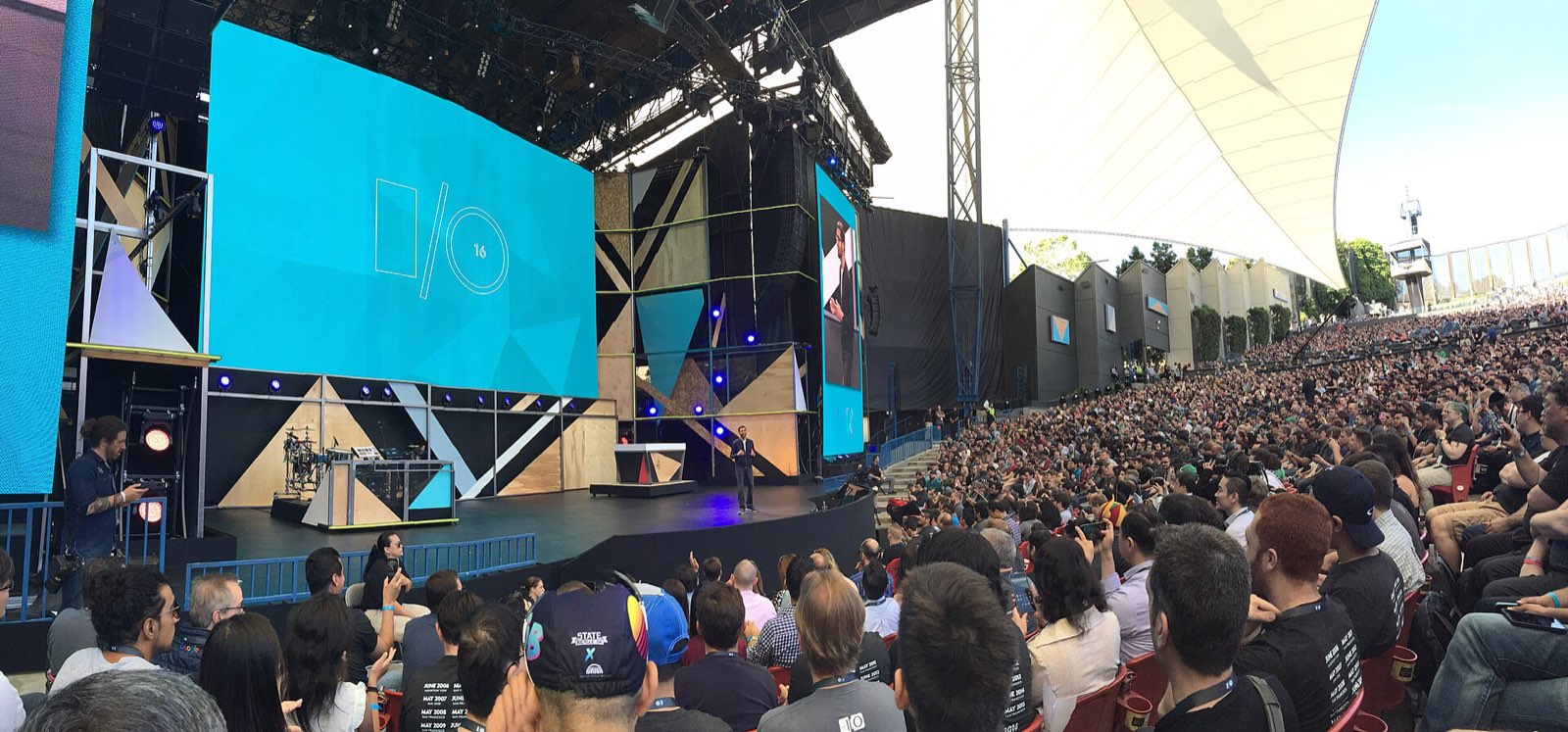
Google I/O has been the company's main developer event since 2008, when it introduced the Android platform. It moved to the Shoreline Amphitheatre in Mountain View in 2016, the edition shown on this page's cover. In recent years the keynotes have shifted toward AI; the 2025 edition featured Google's Jules coding agent.
The agent push that dominated this year started six months earlier. Google launched Antigravity on November 18, 2025, alongside Gemini 3, as an agent-first coding environment for macOS, Windows and Linux. VentureBeat reported at the time that Google had hired the team behind the Windsurf editor, including its CEO Varun Mohan, in July 2025 and licensed its technology for $2.4 billion, and that early users noticed the resemblance. Antigravity launched in public preview with two main views, a conventional editor and a manager surface for supervising several agents, and it supported Anthropic's Claude Sonnet 4.5 and OpenAI's open-weight gpt-oss models as well as Gemini. Early users also reported errors and slow performance.
In February 2026, the Chrome team put out an early preview of WebMCP, a proposal that Google and Microsoft engineers developed in a W3C community group so websites can describe their own actions to AI agents. That preview sat behind a flag in Chrome 146 Canary. I/O moves it to an origin trial.
Gemini 3.5 Flash, the model under the agents
Google's Gemini 3.5 post, signed by Koray Kavukcuoglu, Jeff Dean, Oriol Vinyals and Noam Shazeer, says 3.5 Flash beats Gemini 3.1 Pro on demanding coding and agent benchmarks, and that on output tokens per second it runs four times faster than other frontier models. The developer highlights post goes further and says it outperforms 3.1 Pro across almost all benchmarks.
| Benchmark (Google's figures) | Gemini 3.5 Flash |
|---|---|
| Terminal-Bench 2.1 | 76.2% |
| GDPval-AA | 1656 Elo |
| MCP Atlas | 83.6% |
| CharXiv Reasoning | 84.2% |
Google singled these out as coding and agent benchmarks, which fits its pitch for the model. The model is live in the Gemini app, AI Mode in Search, Antigravity, the Gemini API through AI Studio and Android Studio, and Google's enterprise products. Google says it was built under its Frontier Safety Framework with added safeguards for cyber and chemical, biological, radiological and nuclear risks. Gemini 3.5 Pro is already in internal use and due next month.
The price went up
Developer Simon Willison published notes on his blog the same day. He points out that 3.5 Flash skipped the usual preview label and went straight to general availability under the model ID gemini-3.5-flash, with a context window of 1,048,576 input tokens, up to 65,536 output tokens, a January 2025 knowledge cutoff, and no computer-use support. His main point is cost.
| Model | Price, per Willison |
|---|---|
| Gemini 3.5 Flash | $1.50 per million input tokens, $9 per million output tokens |
| Gemini 3.1 Pro | $2 input, $12 output |
| Gemini 3 Flash Preview | One third of the 3.5 Flash price |
| Gemini 3.1 Flash-Lite | One sixth of the 3.5 Flash price |
Willison also cites Artificial Analysis, which publishes what it costs to run its benchmark suite on each model, a figure that captures how many reasoning tokens a model burns. Running it on Gemini 3.5 Flash at high reasoning cost $1,551.60, against $892.28 for Gemini 3.1 Pro Preview. A cheaper per-token model can still be the more expensive one if it thinks longer. Willison sees the same pattern across the industry, with the big labs testing how much API customers will pay, and notes that Google is still shipping the model in free consumer products.
Key caveat: before swapping 3.5 Flash into an agent loop, measure cost per completed task on your own workload, not price per token. As the Artificial Analysis figures suggest, a model that reasons at length can use far more output tokens per job. Higher accuracy can pay for itself by cutting retries, or it can quietly double your bill.

Antigravity grows into an app, a CLI and an SDK
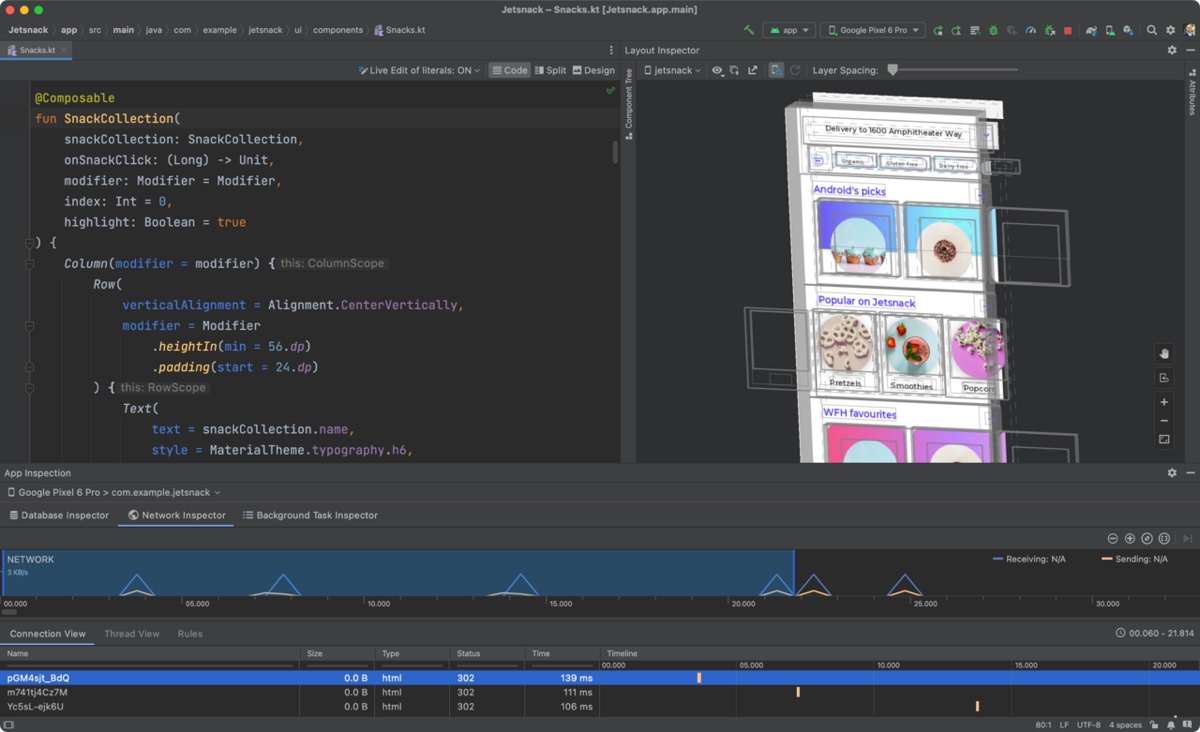
Antigravity 2.0 is now a standalone desktop application that Google describes as the place to orchestrate multiple agents. The listed features are dynamic subagents that split a job into parallel tracks, scheduled tasks that keep running in the background, and integrations with Google AI Studio, Android and Firebase. Projects started in AI Studio can be exported to Antigravity with their full state for local development.
The developer blog describes the security layer in one line: subagents run under built-in cross-platform terminal sandboxing, credential masking and hardened Git policies. Google does not detail these in the keynote recap, so treat them as intent until you have read the documentation and tested them against your own repositories.
Two new surfaces sit next to the app:
- Antigravity CLI runs the same agents from the terminal, which matters for remote machines, scripts and CI.
- Antigravity SDK exposes the agent harness programmatically, so you can customize the agent and deploy it on your own infrastructure.
On pricing for individuals, Google AI Ultra now has a $100-a-month plan with five times the usage limit of Google AI Pro, and Google offered $100 in bonus Antigravity credits for overages until May 25.
Managed Agents put a sandboxed agent behind one API call
This is the release most likely to change how small teams build. Managed Agents in the Gemini API give you an agent that can reason, plan, run code, manage files and browse the web inside an isolated Linux environment that Google provisions. You do not set up containers or write the orchestration loop. Google's announcement, by Ali Çevik and Philipp Schmid of Google DeepMind, shows the shape of the call through the new Interactions API:
from google import genai

client = genai.Client()
interaction = client.interactions.create(
    agent="antigravity-preview-05-2026",
    input="Plot the growth of solar energy generation globally and make some slides in HTML.",
    environment="remote",
)
Each interaction either creates an environment or reuses one you pass in, so a follow-up call resumes with its files and state intact. You can extend the base agent with Markdown files such as AGENTS.md and SKILL.md and register the result as your own managed agent. The agent runs on Gemini 3.5 Flash and uses the same Antigravity harness as the desktop app. Willison notes that the Interactions API, still in beta, keeps conversation history on Google's servers, similar to OpenAI's Responses API.
Managed Agents are rolling out in preview in the Gemini API, the Google AI Studio playground and the Gemini Enterprise Agent Platform. Google's post names early users including Ramp and Resemble AI.

Definition: an agent harness is the code around a model that turns it into an agent: the loop that sends the model a task, executes the tools it asks for, feeds results back, and decides when to stop. Antigravity's harness now ships in four forms: the desktop app, the CLI, the SDK and Managed Agents.
Android and the web
The mobile and browser announcements extend the same idea to Google's platforms.
- Android CLI, now stable, lets coding agents call into Android Studio's build and tooling. Google also open-sourced a set of Android skills to steer models toward current best practices.
- Android Bench, Google's leaderboard for language models on Android development tasks, added open-weight models this week.
- A migration agent in preview converts React Native, web or iOS apps into native Kotlin, and AI Studio now builds native Android apps in Kotlin.
- WebMCP enters an origin trial in Chrome 149. It lets a website expose structured tools, either by annotating existing HTML forms or by registering JavaScript functions through
navigator.modelContext, so an agent can call a site's actions directly. VentureBeat's February report explains the motivation: today's browser agents read screenshots, which cost thousands of tokens each, or parse raw HTML across many steps. - Chrome DevTools for agents adds tools for agents to verify, debug and optimize code in real time.
A $2 million hackathon that scores revenue, not demos
Build with Gemini XPRIZE has a $2 million prize pool, which Google calls the largest ever for a hackathon. According to XPRIZE, teams have 90 days, from May 19 to August 17, to launch a real business, acquire real users and generate real revenue; projections alone will not win. Participants get access to Google's AI stack, including Gemini, AI Studio and Cloud Run, and the organization Hacker Fund handles verification.
| Prize | Amount |
|---|---|
| Grand prize | $500,000 |
| Second place | $200,000 |
| Third, fourth and fifth place | $100,000 each |
| 15 runner-up prizes | $50,000 each |
| 5 category prizes | $50,000 each |
The five categories are education and human potential, entrepreneurship and job creation, small business services, money and financial access, and professional services. Judges weigh business viability, how AI-native the operations are, and category impact equally. Five finalists pitch live in Los Angeles on September 25.

Open questions and criticism
- Benchmarks are self-reported. The 3.5 Flash numbers come from Google, and "almost all benchmarks" leaves room for exceptions. Independent evaluations had barely started on launch day.
- Cost per task. As Willison's figures show, a model that reasons longer can cost more per job even when it is billed per token. Agent loops amplify that.
- Managed Agents pricing. Google's announcement does not give a price, which is the first thing to check before a prototype becomes a product.
- Data and trust. With Managed Agents, your agent's code, files and history live in Google's environment, and the Interactions API stores conversation state server-side. Read the data handling terms before you use it with anything sensitive.
- Security claims. Sandboxing, credential masking and Git policies are described in one sentence. Their real limits will only become clear as developers probe them.
- WebMCP's scope. It is a proposal incubated in a W3C community group, not a finished standard. In February, Chrome engineer Khushal Sagar told VentureBeat it targets cooperative, human-in-the-loop use, and that headless, fully autonomous browsing is a non-goal.
- Lock-in. Each layer works best with the others. The agent harness defaults to Gemini, and Managed Agents run only in Google's cloud.
What builders can do this week
- Re-run your evals. If you have an agent on Gemini 3 Flash or 3.1 Pro, swap in
gemini-3.5-flashand compare task success, latency and cost per task on your own test set. - Try a managed agent for one chore. Pick something with a clear output, such as turning a CSV into a report, and compare the effort with your current containerized setup. Use the environment-reuse feature to test multi-step work.
- Write an
AGENTS.md. Managed Agents read it to customize the base agent, so a clear one, plusSKILL.mdfiles for repeatable jobs, is worth the hour. - Expose tools in your web app. If you build for the browser, read the WebMCP proposal and try the origin trial on a form-heavy page.
- Treat the XPRIZE as a short accelerator. Pick a narrow problem someone will pay for in week one, set up payments and analytics before polishing features, and keep a record of what the AI actually does in production, since that is a third of the score.
Practical tip: for a revenue-judged hackathon, ship a paid offer within days, even a manual one behind a simple form, and automate the parts customers actually use. Ninety days goes quickly, and judges will want real transactions, not a roadmap.

What to watch
As of May 20, three dates are on the calendar. Gemini 3.5 Pro is due next month, and its price will show whether the jump in Flash pricing was a one-off or a new tier structure. The XPRIZE build window closes on August 17, with finals in Los Angeles on September 25. And the WebMCP origin trial in Chrome 149 will show whether sites are willing to describe their own actions to agents. Less visible, but as important for small teams, is the price Google eventually puts on Managed Agents.
Sources
- Google I/O 2026 developer highlights (Google, May 19, 2026)
- All the news from the Google I/O 2026 developer keynote (Google for Developers, May 19, 2026)
- Gemini 3.5, frontier intelligence with action (Google, May 19, 2026)
- Introducing Managed Agents in the Gemini API (Google, May 19, 2026)
- Gemini 3.5 Flash, more expensive, but Google plan to use it for everything (Simon Willison, May 19, 2026)
- XPRIZE launches hackathon with $2 million prize pool, backed by Google (XPRIZE, May 19, 2026)
- Google Antigravity introduces agent-first architecture (VentureBeat, November 2025)
- Google Chrome ships WebMCP in early preview (VentureBeat, February 2026)
More from the blog
Tools ·
MCP's 2026-07-28 spec removes sessions, so servers can run behind plain load balancers
The new Model Context Protocol revision drops the initialize handshake and Mcp-Session-Id. What changes for load balancers, gateways and serverless, plus a migration checklist.
10 min read

Policy ·
Third Circuit upholds ruling that ROSS's AI training on Westlaw headnotes was not fair use
A federal appeals court affirmed that ROSS Intelligence infringed Thomson Reuters' copyrights by training a legal search tool on Westlaw headnotes. The opinion itself is still sealed.
10 min read

Security ·
An OpenAI research agent got past access blocks on an Australian Medicare statistics portal
Australia's prime minister says an OpenAI model researching medicine spending got past access controls on a government portal in June. OpenAI told the government in September.
10 min read